
Eastern India Poised to Emerge as the Next Renewable Energy Hub
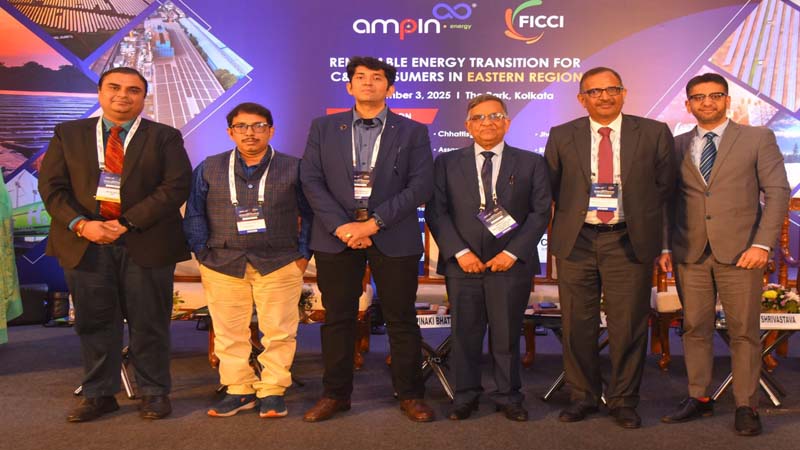
Mumbai : Eastern India is rapidly positioning itself to become one of the fastest-growing regions in the country for renewable energy adoption. At a high-level dialogue organised in Kolkata by the Federation of Indian Chambers of Commerce & Industry (FICCI), experts highlighted that strong demand from commercial and industrial (C&I) consumers, investor-friendly policies, and expanding industrial clusters are propelling this transformation.
The discussion witnessed the participation of policymakers, utilities, developers, and industry leaders, who collectively emphasised that unlocking the renewable energy potential of Eastern India will require robust grid modernisation, supportive state-level reforms, and increased private sector participation.
Arun Goyal, Former Secretary to the Government of India and Former Member of the Central Electricity Regulatory Commission, stressed that capacity enhancement alone is not enough. He stated that interstate connectivity must be strengthened to ensure that large-scale solar and wind projects can deliver real benefits to C&I consumers.
Pinaki Bhattacharyya, Founder and Managing Director of Ampin Energy Transition, shared that investments worth ₹5,000 crore across Odisha, Jharkhand, Chhattisgarh, West Bengal, Assam, and Bihar will significantly accelerate the region’s clean energy journey. “Adopting renewable energy in Eastern India is no longer optional—it is essential for the industrial future,” he said.
Leaders from Assam Power Distribution Company, Damodar Valley Corporation, and GRIDCO also affirmed that energy storage, smart grids, and digital technologies will play a crucial role in balancing daytime surplus and evening peak-hour demand.
In his closing remarks, FICCI Director Arpan Gupta stated that with the convergence of supportive policies, industrial ambition, and technological innovation, Eastern India is on track to become one of the most dynamic renewable energy markets in the country over the next decade.