
Political Face-off Over Delhi’s Toxic Air: LG VK Saxena Holds Kejriwal Responsible
New Delhi : The national capital is once again grappling with severe air pollution, with the Air Quality Index (AQI) crossing 400 at 27 monitoring stations. Areas such as Anand Vihar, Nehru Nagar, Okhla, Mundka and Siri Fort are witnessing extremely alarming conditions, making it difficult for residents to breathe. Dense fog, stagnant winds and falling temperatures have further worsened the situation, intensifying the pollution crisis.
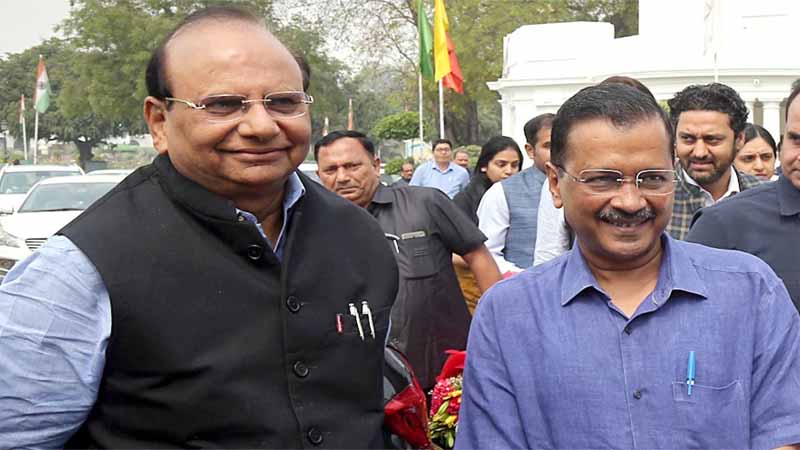
Amid this, Lieutenant Governor VK Saxena has written a strongly worded 15-page letter to former Chief Minister Arvind Kejriwal, holding his government responsible for Delhi’s deteriorating air quality. The letter alleges that 11 years of neglect and criminal inaction pushed the capital into the present emergency-like situation. This development comes at a time when Delhi is now being governed by a Bharatiya Janata Party-led government under Chief Minister Rekha Gupta.
The LG’s letter has reignited the political debate over air pollution in Delhi. Experts argue that given the alarming state of the city’s air, there is little room left for blame games. The debate over “11 years versus 11 months” will not bring relief to citizens gasping for clean air. The real question, they say, is who will take responsibility and when effective solutions will be implemented.
Critics point out that the previous government made several promises of aggressive action against pollution, but failed to deliver tangible results on the ground. Construction dust, garbage burning, a deteriorating public transport system, industrial emissions and lack of coordination with neighboring states together have turned Delhi into what many describe as a “gas chamber.” The LG’s letter highlights this long-term institutional failure rather than a problem that emerged overnight.
However, experts also caution that accountability cannot be limited to past governments alone. While the new administration has inherited a crisis, it cannot afford delay or deflection. Delhi urgently needs both immediate relief measures and long-term, sustainable solutions to tackle air pollution.
Meanwhile, Delhi’s Environment Minister Manjinder Singh Sirsa has stated that despite some relaxation under Stage IV of the Graded Response Action Plan (GRAP), the “No PUC, No Fuel” policy will continue to be strictly enforced. He added that inspections of Pollution Under Control (PUC) centers revealed irregularities, leading to the suspension of 12 centers. The government has also allocated ₹100 crore for the rejuvenation of water bodies.