
World Book Fair 2026: Youth Reconnect with Books Amid Digital Glitz
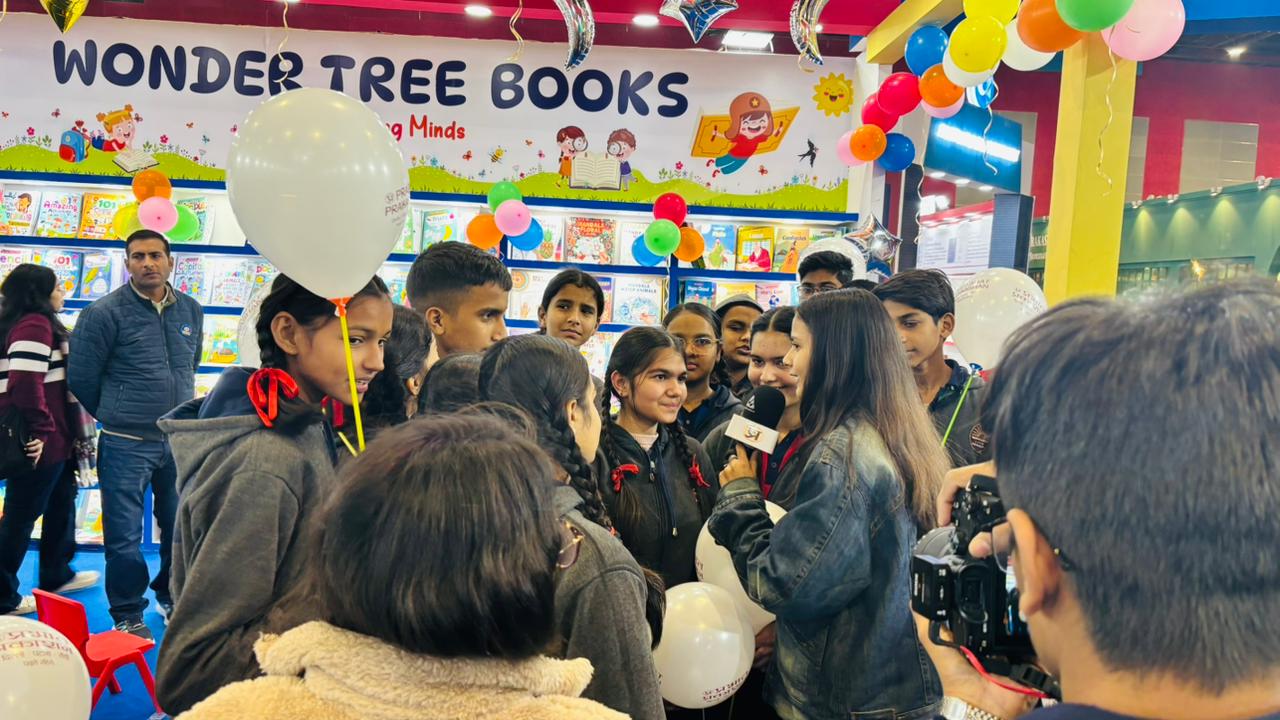
New Delhi : The New Delhi World Book Fair 2026 has emerged not merely as a marketplace for books, but as a vibrant cultural dialogue connecting generations, ideas, and mediums. In the digital age, the fair has effectively dispelled the notion that the growing dominance of screens is shrinking the world of books. Instead, books here appeared in renewed forms, found new readers, and spoke in many languages—expanding their reach rather than diminishing it.
The enthusiasm of Gen Z readers was particularly visible in the fair’s corridors. Books by social media influencers, travelogues, romantic fiction, and popular crime narratives drew strong interest from young visitors. This trend signals that today’s youth are not confined to quick digital content alone; they are also returning to deeper reading and shared intellectual experiences. When authors and readers born in the internet age engage with print, both the reach and impact of literature grow.
At the same time, the presence of senior citizens and middle-aged readers at stalls showcasing classic literature highlighted that the love for books transcends age. Smiling faces at selfie points and visitors lost in memories of earlier days proved that book fairs are no longer just intellectual spaces, but emotional experiences as well—where nostalgia and modernity blend seamlessly.
The central message of the New Delhi World Book Fair 2026 is clear: digital and traditional mediums are not rivals, but complementary forces. When technology helps readers discover books and books, in turn, offer depth of thought and reflection, the foundation of a balanced intellectual society is laid. The fair presents an optimistic vision of the future of literature—one that is open to every generation, every interest, and every medium.
Held at Bharat Mandapam from January 10 to 18, the fair witnessed massive footfall across age groups, reinforcing the belief that even in an era dominated by social media likes and comments, interest in books remains undiminished.
Specially curated sections for children further demonstrated that the younger generation has not drifted away from the world of books. Designed to spark curiosity and a love for reading, these spaces—including Bal Mandapam, Kids Express, cultural performances, and industry forums—made it clear that the fair is a shared platform not only for readers, but also for writers, publishers, educators, and policymakers. Reading here is linked with entertainment, dialogue, and participation—an approach well-suited to contemporary times.
Often labeled the “screen generation,” Gen Z visitors this time were seen at Pragati Maidan turning pages instead of pixels, searching for the future in printed words. Srishti Jha, a young visitor constantly surrounded by technology and gadgets, was deeply immersed in the ocean of knowledge and literature at the fair. She remarked that no matter how far technology advances, true mental peace is still found in the wisdom contained in books.
In this context, Union Education Minister Dharmendra Pradhan’s emphasis on encouraging young writers to make the most of their mentorship period and produce meaningful, inspiring books is particularly relevant. In an era of rapid information flow, deep research, factual authenticity, and clarity of thought are more essential than ever. His directive to ensure access to physical and digital resources through the National Book Trust (NBT), and to research material under the “One Nation, One Subscription” (ONOS) initiative, reflects a forward-looking vision.
Equally significant is the PM-YUVA 3.0 initiative, which recognizes India’s diversity as its real strength. The energy, confidence, and aspirations of young writers from varied backgrounds give words to the dream of a “Viksit Bharat.” The scheme underlines that governance is not limited to curricula and examinations alone, but also values ideas, dialogue, and creativity as drivers of national progress. PM-YUVA 3.0 is not just a programme to groom writers; it is an investment in India’s future intellectual capital—where the pen shapes ideas, and ideas shape the nation’s destiny.