
NSD’s 25th Bharat Rang Mahotsav Reaches Day 10 : 130+ performances, 19 locations, diverse formats from micro dramas to one-act plays
Srishti Jha
New Delhi: The 25th Bharat Rang Mahotsav (BRM), the world’s largest international theatre festival organised by the National School of Drama, continued to captivate audiences on its 10th day with a powerful showcase of diverse theatrical expressions from across India and the world. By the time this news reaches its readers, BRM 2026 will have already showcased more than 130 national and international performances — including micro dramas and one-act plays — across 19 locations in India.
Among these performances were 31 micro dramas, 5 one-act plays and 9 street plays, presented by diverse student groups from colleges across Delhi–NCR, adding depth, creativity and youthful energy to the festival lineup. In addition to these plays, various infotainment programmes — including band performances, talk shows, literary discussions, film screenings and a children’s theatre workshop — have also been part of BRM 2026 so far.
The 10th day of the festival showcased a rich spectrum of storytelling, from compelling Urdu and Hindi narratives to Kashmiri folk traditions, alongside international productions from Poland and Russia — bringing global narratives together on a single platform. The day also featured an engaging street play segment, Gautam Kishanchandani Tees Joseph Talk Show, which drew strong audience participation and added a vibrant, interactive layer to the festival.
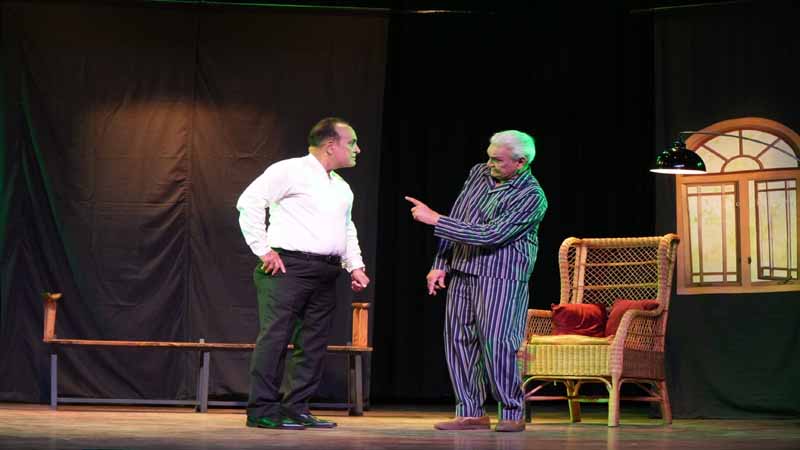
The day’s first full-length play was “Badzaat,” written by Bilquis Zafrul Hasan and directed by Javed Sameer, presented by Creative Adda, Delhi. This was followed by “Daddy,” written and directed by Surya Mohan Kulshrestha and performed by the Darpan Lucknow group from Uttar Pradesh.
The day’s first full-length play was “Badzaat,” written by Bilquis Zafrul Hasan and directed by Javed Sameer, presented by Creative Adda, Delhi. This was followed by “Daddy,” written and directed by Surya Mohan Kulshrestha, performed by the Darpan Lucknow group from Uttar Pradesh.
In addition to this, audiences experienced the Kashmiri production “Aka Nundun (Apple of the Eye)”, a Bhand Pather play directed by Arshad Mushtaq and presented by Peather Baraye’ Kasheer from Srinagar, J&K—bringing the region’s rich folk culture to the central stage.
The international segment featured the Polish–English production “Umadevi Observes Wanda Dynowska,” written and directed by Likasz Chotkowski of Teatr Malabar Hotel, followed by “A Very Simple Story,” a Russian production directed by Alexey Blokhin from GITIS, Russia. Both performances showcased the festival’s commitment to global artistic exchange and cross-cultural dialogue.
As part of the NSD Students’ Union initiative Adivitya, the Street Play segment brought powerful narratives to the forefront through performances by leading college theatre groups. Vivaran Group from Vivekananda Institute of Professional Studies opened the showcase with Kuchh Ansune, a hard-hitting play addressing the deeply sensitive and urgent issue of child abuse, urging society to listen to stories often left untold. They were followed by Rehnuma Group from Indira Gandhi Delhi Technical University for Women, who performed Baby Shark Do Do Do Do, a thought-provoking piece exploring how parenting styles and family environments shape a child’s mental, physical, and emotional well-being. The segment also featured Zehaanal Group from Fairfield Institute of Technology & Management, whose compelling portrayal focused on the lived realities, emotional turmoil, and systemic challenges faced by prisoners, offering a rare glimpse into lives behind bars.
In the Film Screening segment curated under Adivitya, select FTII Diploma films were showcased, reflecting the institute’s legacy of strong cinematic storytelling. The lineup included In the Shadow of Strands, directed by Jasmeet Singh; Whose Stories Are These by *Aditi Sinha; and the evocative Vijay Dutt ko Pyas Kyun Lagti Hai. Each film highlighted distinct cinematic voices and diverse thematic explorations, adding depth and dimension to the festival’s programming. The day ended with Atrangi Satrangi, written by Devised play, lead by Dr. S. Boominathan & Deepa, Group: NSD TIE, Sunday Club Part-1, Group-J.
As part of its expansive outreach, Day 10 productions were staged across multiple cities — including the festival’s hub, Delhi — as well as Bengaluru, Patna, Sakhali (Goa), Kolkata, Paradip (Odisha), Ranchi, Raipur, Surat and Pune.
The 25th edition, BRM 2026, spans 25 days from 27 January to 20 February 2026, showcasing over 277 productions across 228 Indian and international languages, including several underrepresented tongues. The festival brings together national, international and regional productions, with participation from 9 countries and theatre groups from every state and union territory.
Celebrating India’s theatrical diversity, BRM 2026 includes performances by children’s groups, tribal communities, and artists from marginalised sections, reaffirming NSD’s commitment to inclusivity and the universalisation of theatre.
NSD has been continuously working towards the spread and democratisation of theatre. Recently, it launched Rang Akash, internet radio to promote theatre along with launching its OTT platform Natyam to avail some of its prized productions to theatre lovers across the nation.