From the Desert to the Rhine: Modi– Friedrich Merz Dialouge Strengthens the Rajasthan–Germany Tourism Bridge
Jaipur/Berlin : The recent dialogue between Prime Minister Narendra Modi and German Chancellor Friedrich Merz has elevated India–Germany relations to a new strategic phase.
The cooperation in technology, climate action, and economic investment dominated the discussions, and cultural diplomacy coupled with tourism has emerged as a vital dimension of the bilateral partnership.
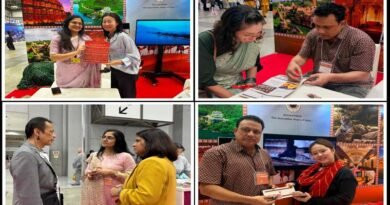
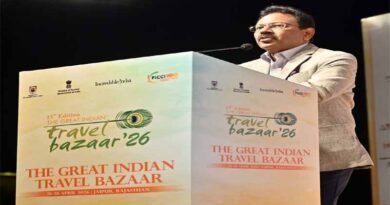
Against this backdrop, Rajasthan Tourism is set to mark a strong presence at ITB Berlin from March 3 to 5. It will position the state as a heritage-driven and sustainability-oriented destination.
Under the theme “From the Desert to the Rhine,” Rajasthan will present its living heritage, responsible tourism initiatives, and legacy of royal hospitality to one of the world’s most influential travel trade platforms.
Europe: A High-Value Source Market
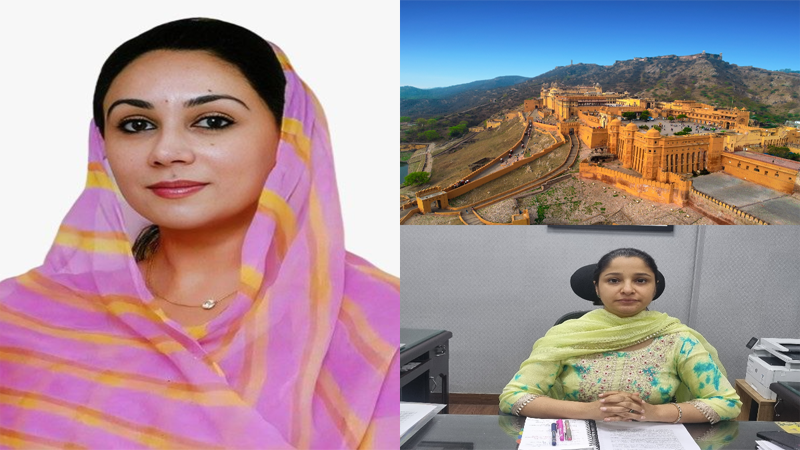
According to Tourism Commissioner Rukmani Riar, Rajasthan recorded 1,945,068 foreign tourist visits in 2025. Of these, 575,968 visitors came from 25 major European countries, accounting for approximately 29.6 percent of total foreign arrivals.
Germany ranked third among European source markets with 82,703 tourist visits, following the United Kingdom and France. This underscores Germany’s growing importance as a high-capacity and quality-focused outbound travel market for Rajasthan.
A Landscape of Diversity and Cultural Depth
Rajasthan offers a striking geographical contrast from the deserts of the Thar to greener and riverine systems in southern districts, along with the Aravalli hill range.
Additionally, the peak travel season between October and March offers temperate weather and a vibrant calendar of cultural festivals, fairs, and performing arts traditions—an appealing combination for visitors.
World Heritage and Living Traditions
Rajasthan’s identity is rooted in “living heritage”—a landscape where forts and palaces remain embedded in daily life.
Moreover, the United Nations Educational, Scientific and Cultural Organization (UNESCO)-listed sites, including Amber, Chittorgarh, and Ranthambore forts, add a mesmerising experience to the journey, and the Walled City of Jaipur, which was inscribed as a UNESCO World Heritage Site in 2019, remains a key attraction for visitors.
Sustainability and Green Transition
Riar noted that under the leadership of Chief Minister Bhajan Lal Sharma, Rajasthan Tourism is expanding its global outreach while strengthening its sustainability commitments.
The state’s renewable energy leadership reinforces its green credentials. Eco-camps, community-based homestays, plastic-free hospitality practices, and electric mobility tours are being integrated into tourism circuits to align with European sustainability standards.
Culinary and Cultural Connections
The culinary traditions—featuring millet-based breads, lentil preparations, and elaborate community dining customs—reflect centuries of adaptation to desert ecology.
Germany’s emphasis on organic produce, regional sourcing, and sustainable consumption provides a natural area of cultural convergence. Culinary exchanges, food festivals, and market immersion experiences are being explored as part of experiential tourism initiatives.
Focus at ITB Berlin 2026
At ITB Berlin, Rajasthan will prioritise B2B engagements with European tour operators; promotion of cultural heritage; presentation of sustainable tourism frameworks; and introduction of new thematic circuits and curated travel packages. The state’s emphasis will be on quality partnerships rather than volume-centric growth.