
Delhi Excise Policy Case: High Court Issues Notice to Kejriwal, Sisodia After CBI Challenges Acquittal
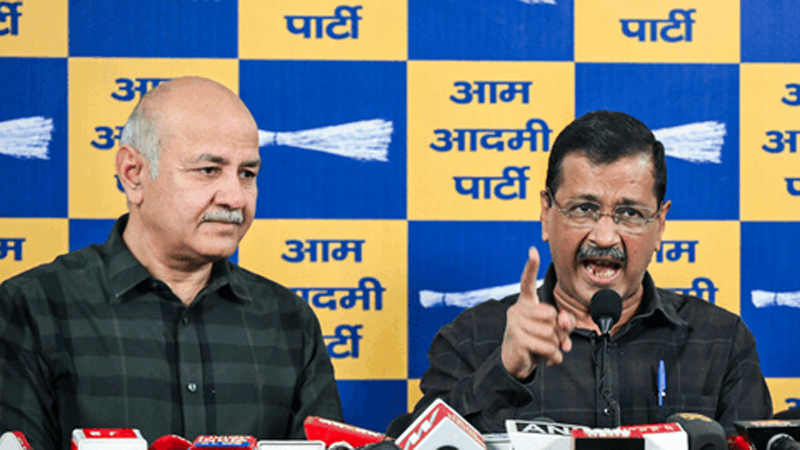
New Delhi: The Central Bureau of Investigation on Monday filed an appeal before the Delhi High Court challenging the order of a special court that had acquitted former Delhi Chief Minister Arvind Kejriwal, former Deputy Chief Minister Manish Sisodia and several others in the Delhi excise policy case.
The High Court issued notices to Kejriwal, Sisodia and 21 other accused persons while hearing the CBI’s petition. The investigation agency argued that the trial court’s decision to acquit the accused was legally flawed and ignored key facts and evidence presented during the investigation.
Appearing for the CBI, Solicitor General Tushar Mehta told the court that the excise policy case was among the “largest scams” and represented a clear instance of corruption. He alleged that the trial court had acquitted Kejriwal, Sisodia and others without a detailed hearing of the prosecution’s arguments.
Mehta further claimed that the CBI had gathered substantial evidence indicating conspiracy and bribery in the alleged manipulation of the excise policy. According to the agency, witnesses and documentary evidence support its case against the accused. The CBI also argued that several important pieces of evidence collected during the investigation had been overlooked by the lower court while granting acquittal.
The agency also referred to travel details of alleged bribe givers, stating that some individuals continued to travel in private aircraft during the peak of the COVID-19 pandemic, despite restrictions on such flights.
Last week, however, a Delhi court had ruled that the evidence presented by the CBI during the investigation failed to establish a prima facie case of concealment of policy decisions, bias, or violation of constitutional provisions. The court subsequently acquitted Sisodia and others in the case.
Special Judge Jitendra Singh, who was hearing the matter filed by the CBI, had examined charges against Sisodia, Kejriwal, K. Kavitha, president of Telangana Jagruthi, and 20 other accused individuals.
In his detailed 598-page order, the judge stated that the material available on record did not indicate any prima facie evidence of policy concealment, arbitrary action, or violation of constitutional rights. Instead, the court observed that the policy formulation process appeared to involve consultations, communication, and administrative caution.
According to the prosecution, Sisodia had allegedly ignored the recommendations of the Ravi Dhawan Committee report, which pointed out certain irregularities in the excise policy. However, the court noted that the new policy had been introduced to address challenges in the previous excise framework, including improving distribution margins and addressing monopoly tendencies and regulatory gaps in the earlier system.
The matter will now proceed before the Delhi High Court, which will examine the CBI’s challenge to the trial court’s order in the coming hearings.