Sadaiv Atal: Atal Ji’s Organizational Vision and the Global Expansion of the BJP
Dr. Dhananjay Giri
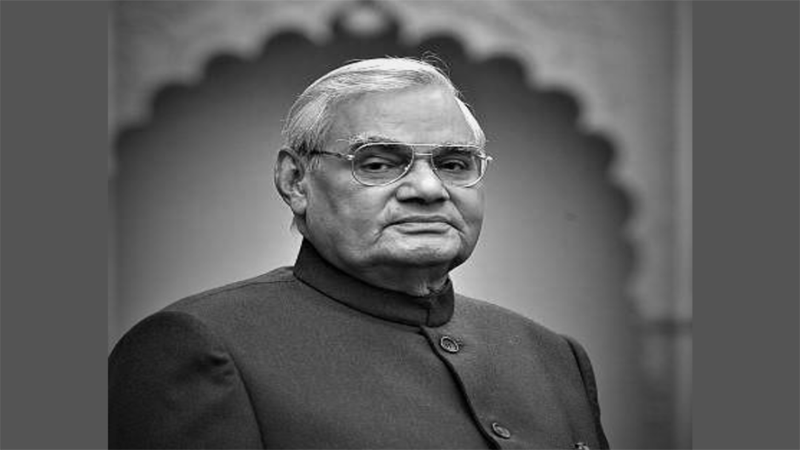
After the establishment of the Bharatiya Janata Party, Bharat Ratna and former Prime Minister Late Shri Atal Bihari Vajpayee articulated a clear and far-sighted vision regarding the party’s future and expansion. He believed that electoral success alone is never sufficient for a political organization to achieve its goals. What is essential is a strong, ideologically committed cadre, effective outreach to every section of society, and a continuous, wide-ranging expansion of membership. Today, Atal Ji’s thinking stands firmly established as a guiding principle in Indian politics.
Under the leadership and guidance of Prime Minister Shri Narendra Modi, Atal Ji’s organizational philosophy has been followed with complete dedication. As a result, the Bharatiya Janata Party has emerged not only as India’s largest political party, but also the largest in the world. This achievement is significant not merely in numerical terms, but as a reflection of active grassroots workers, social inclusion, and the widespread dissemination of nationalist ideology.
Atal Bihari Vajpayee was the first National President of the BJP. Even earlier, in 1951, during the founding of the Bharatiya Jana Sangh with Dr. Syama Prasad Mookerjee, he emerged as a young founding leader. From the very beginning, he accorded the highest priority to organization-building. Despite limited resources and challenging circumstances, he strengthened the Jana Sangh ideologically, instilled discipline, and guided it toward nationwide expansion. He firmly believed that the strength of ideas and organization alone can give longevity to any movement.
Atal Ji’s politics was not power-centric, but nation- and organization-centric. He believed that unless a party reaches the last person in society, its mission remains incomplete. That is why he placed special emphasis on connecting youth, women, farmers, workers, the deprived sections and the middle class with the organization. The BJP’s broad social base today is a direct outcome of this vision.
Born on 25 December 1924 in Gwalior, Madhya Pradesh, to mother Smt. Krishna Devi and father Shri Krishna Bihari Vajpayee, Atal Bihari Vajpayee was a statesman whose life continues to inspire the nation. On 16 August 2018, he completed his purposeful journey of 94 years, yet his ideas, values and actions remain alive in India’s collective consciousness.
Late Atal Bihari Vajpayee possessed a multi-dimensional personality—he was a brilliant student, an eloquent orator, a freedom fighter, a sensitive journalist, a proud champion of language, and a fearless, capable administrator. He was a devoted champion of national unity, cultural consciousness and democratic values. These qualities earned him respect not only among supporters, but also deep admiration from political opponents. Reflecting this stature, Russian President Vladimir Putin once remarked that “Atal Bihari Vajpayee represents an entire era in Indian politics.”
Atal Ji’s entire life was dedicated to the unity and integrity of the nation. On the question of Kashmir’s complete integration with India, he stood firmly alongside Dr. Syama Prasad Mookerjee from the very beginning. The conviction that “one nation cannot have two constitutions, two flags and two heads” remained emotionally central to him throughout his life. Whether in opposition through struggle, or as Prime Minister through solutions, Kashmir remained a core national objective for him. His famous statement—“If Pakistan is incomplete without Kashmir, then India is complete even without Pakistan”—clearly reflected his nationalist outlook.
He openly criticized the policies of Pandit Jawaharlal Nehru regarding Kashmir and Hindu refugees. From Parliament to the streets, he opposed Chinese expansionism. His historic 1959 statement in Parliament—“We cannot build a palace of friendship with China on the corpse of Tibet’s freedom”—continues to echo as a warning in India’s foreign policy discourse. On the liberation of Goa, Daman and Diu in 1961, he said, “This is not a war; it is the return of India’s lost breath.” On territorial issues, he clearly asserted that the land of the country is not the property of any government, but a sacred trust of the nation.
In journalism, through publications such as Rashtradharma, Panchjanya, Veer Arjun and Swadesh, he gave voice to nationalist consciousness. He believed journalism was not merely about delivering news, but about providing direction to the nation—a principle that remains relevant for today’s media.
As Prime Minister, Atal Bihari Vajpayee gave fresh momentum to India’s development. Economic reforms, infrastructure, education, security and poverty alleviation all witnessed visionary initiatives under his leadership. His balanced management of a 24-party coalition demonstrated remarkable political maturity. Projects like the Golden Quadrilateral and the Pradhan Mantri Gram Sadak Yojana strengthened the economic arteries of the nation. He believed that roads are the veins of a nation—if they are blocked, development comes to a halt.
In education, the Sarva Shiksha Abhiyan, and for the poor, the Antyodaya Anna Yojana, reflected his sensitivity. Initiatives like the River Linking Project highlighted his long-term vision. Today’s communication revolution and the democratization of mobile phones are also outcomes of his efforts. By adding “Jai Vigyan” to “Jai Jawan, Jai Kisan,” he gave modern India a powerful new mantra.
The Pokhran nuclear tests of May 1998 symbolized his indomitable courage and national self-respect. Despite international pressure and sanctions, he established India as a self-reliant and responsible nuclear power. His message was unambiguous—India would never compromise on its security under external pressure.
In foreign policy, he maintained a balance between strength and peace. The Lahore Bus Yatra symbolized his commitment to peace, while India’s decisive victory in the Kargil War under his leadership reflected firmness when required. He was a statesman who sought peace, yet never hesitated to take tough decisions in the national interest.
Atal Ji always placed the nation above partisan politics. Even while in opposition, he supported governments on issues of national interest—be it the 1971 Bangladesh War or India’s united stand on Kashmir at international forums in 1994. This conduct made him an exemplary democratic leader.
His love for Hindi was unparalleled. His speech in Hindi at the United Nations symbolized linguistic pride. His advocacy for education in the mother tongue is now being realized through the National Education Policy. He was also a renowned poet, whose verses reflected nationalism, democracy and human sensitivity.
For the protection of democracy, he willingly accepted imprisonment during the Emergency. Refusing unethical compromises for power—even at the cost of losing government—stands as the highest example of his democratic commitment.
Today, as the nation commemorates the birth centenary year of Atal Bihari Vajpayee, it is evident how timeless and relevant his organizational vision remains. The BJP’s emergence as the world’s largest political party is not merely the success of present leadership, but the outcome of the strong ideological and organizational foundation laid by Atal Ji.
Atal Ji’s life and ideas continue to guide the BJP. His belief that “organization is strength” remains the core mantra behind the party’s functioning, expansion and success. This, indeed, is the truest tribute to him.
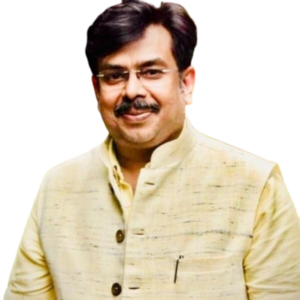
(The author is a political analyst and associated with BJP)