
Supreme Court Poised to Decide on Passive Euthanasia Plea of Harish Rana, ‘Living Corpse’ for 12 Years
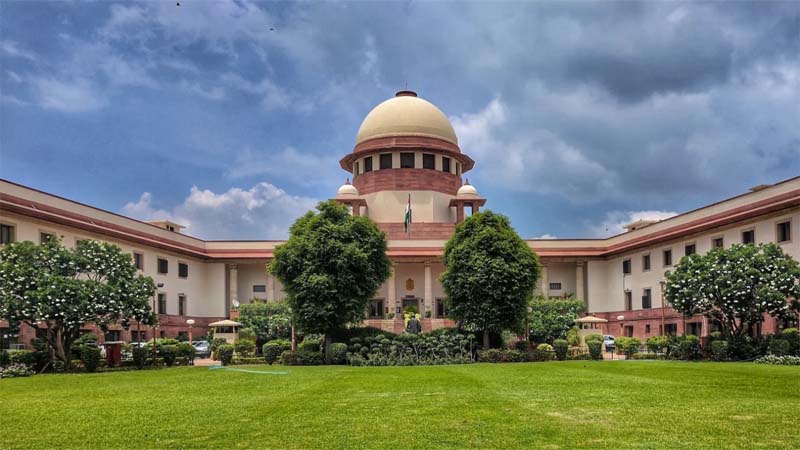
New Delhi : The Supreme Court is set to deliver its verdict on a petition seeking permission for passive euthanasia for Harish Rana (32), who has been in a permanent coma-like condition for the past 12–13 years. The plea has been filed by his parents, who have urged the court to allow withdrawal of life-sustaining treatment to end their son’s prolonged suffering.
A resident of Delhi, Harish Rana suffered severe head injuries in 2013 after falling from the fourth floor of his paying guest accommodation in Chandigarh. The accident left him completely incapacitated, with doctors describing his condition as irreversible. A medical board has also opined that there is no possibility of recovery or improvement in his health.
The case has once again drawn national attention after Harish’s father approached the Supreme Court seeking permission for passive euthanasia. If the court allows the withdrawal of life-support measures, it could become the first case in India where passive euthanasia is formally approved under judicial scrutiny.
Harish’s parents, who are also caring for their two other children, sold their house in Delhi and shifted to Ghaziabad so they could stay close to AIIMS, where their son is being treated. For years, they have been pursuing legal remedies to seek an end to what they describe as their son’s continuous and irreversible suffering.
Passive euthanasia, which involves the withdrawal of life-sustaining treatment, was first recognized by the Supreme Court in the 2011 Aruna Shanbaug case. It was later given legal backing in the landmark 2018 Common Cause vs Union of India judgment, which held that the right to die with dignity is an intrinsic part of the right to life under Article 21 of the Constitution.
Active euthanasia—where death is caused directly through drugs or injections—remains illegal in India.
Harish’s parents had initially approached the Delhi High Court in July 2024, but their petition was dismissed on the ground that Harish was not dependent on mechanical ventilation for survival. Subsequent petitions filed before the Supreme Court in 2024 were also rejected. The current proceedings are being closely watched, as the court’s decision could have far-reaching implications for end-of-life care and the legal framework surrounding passive euthanasia in India.