The Changing Political Journey of Raghav Chadha
New Delhi: The Aam Aadmi Party (AAP) has recently undergone a significant organizational change. The party has removed its young face and Rajya Sabha MP Raghav Chadha from the post of Deputy Leader in the Rajya Sabha. He has been replaced by Punjab MP Ashok Kumar Mittal.
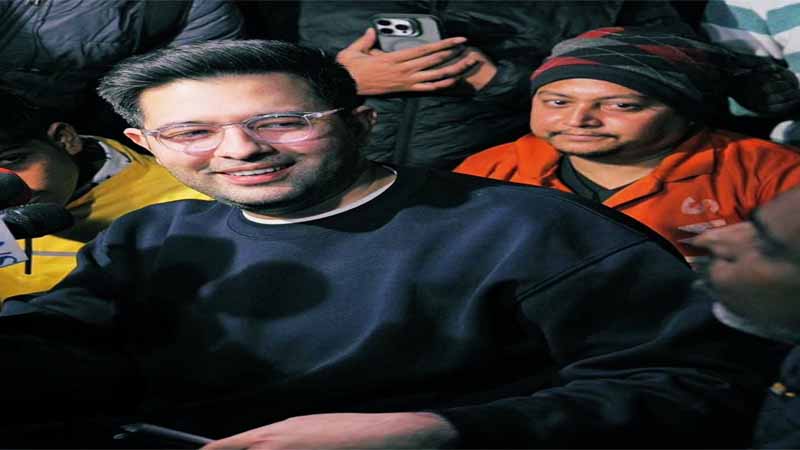
Following this development, Raghav Chadha’s political journey has once again come into focus. Once regarded as the party’s “blue-eyed boy,” he now appears to be gradually moving to the sidelines.
Chadha has been active in the party since the days of the Jan Lokpal movement. In the early phase, he worked behind the scenes, building a strong grasp over data and policy matters. Gradually, he began addressing media queries after press conferences, representing the party in television debates, and eventually became a key member of AAP’s strategic core.
When the party formed its second government in Delhi under the leadership of Arvind Kejriwal, Chadha was appointed Vice Chairman of the Delhi Jal Board. During this period, he emerged as one of the most trusted faces of the party leadership. At a time when leaders like Prashant Bhushan and Kumar Vishwas parted ways with the party, Chadha stood firmly in defense of the leadership and its policies.
In 2019, he contested the Lok Sabha elections from South Delhi but lost. Despite the defeat, his stature within the party continued to grow. He later played a crucial role in Punjab politics and, following the party’s victory in the 2022 Assembly elections, was nominated to the Rajya Sabha. By then, he was counted among the party’s top नेताओं.
In the Rajya Sabha, he actively cornered the government alongside Sanjay Singh. At the same time, opposition parties frequently raised questions about his alleged influence in the Punjab government, though both the party and Chadha denied these claims.
However, circumstances began to change. During the Delhi excise policy case, when several senior party leaders were jailed, there was an expectation that Chadha would take a more visible stand. Instead, he remained away from Delhi citing eye treatment and was relatively inactive on social media. This led to murmurs within the party about a perceived lack of support during a critical phase.
His stance during controversies, including the Swati Maliwal episode, also appeared different. In recent times, he has been noticeably absent from major party activities and protests. Instead, he has focused on building an independent image in the Rajya Sabha by raising issues concerning the middle class—such as expensive airport snacks, railway facilities, and rising education costs.
Amid these developments, the party eventually removed him from the post of Deputy Leader in the Rajya Sabha—a move seen as a significant signal in political circles.
Politics often witnesses rapid rises and equally swift declines. Raghav Chadha’s journey stands as a recent example—once among the most trusted faces of the party, he now appears to be gradually moving to the margins.
As the saying goes, “The faster one rises, the quicker circumstances can change.” Chadha’s story reflects this reality with striking clarity.