
ASSOCHAM Leads Industry Dialogue on Water Use Efficiency, Pushes Voluntary Action Agenda
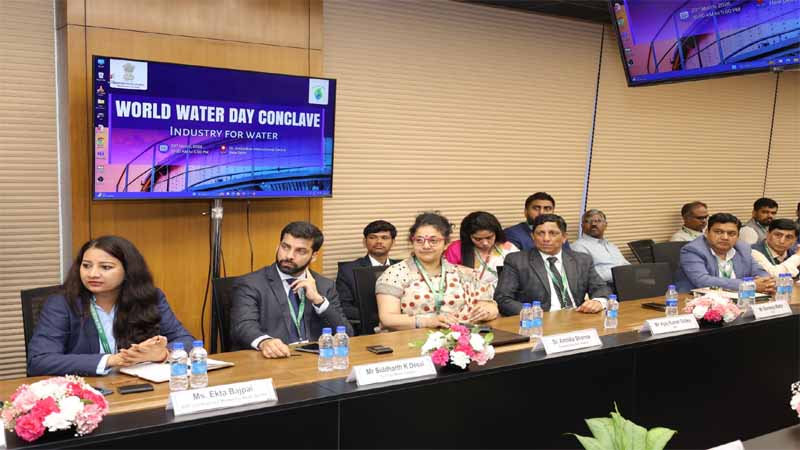
New Delhi : ASSOCHAM played a key role in advancing discussions on sustainable water management at the World Water Day Conclave organised by the Ministry of Jal Shakti at Dr. Ambedkar International Centre, New Delhi. The high-level dialogue, themed “Industry for Water: Driving Efficiency, Awareness and Voluntary Action,” brought together policymakers, industry leaders, and experts to accelerate water use efficiency (WUE) across sectors.
The inaugural session was attended by prominent dignitaries including C. R. Patil, Union Minister of Jal Shakti; V. Somanna, Minister of State for Drinking Water and Sanitation; and Raj Bhushan Choudhary, Minister of State for Water Resources, River Development and Ganga Rejuvenation. Senior officials such as V. L. Kantha Rao, Ashok K. K. Meena, and Archana Varma were also present.
Addressing the gathering, C. R. Patil emphasized the critical role of water in India’s overall development, urging industries to act as key partners in ensuring sustainable and efficient usage. V. L. Kantha Rao highlighted the importance of strengthening research and development within industries to scale WUE and foster innovation-driven solutions. Archana Varma stressed that awareness and voluntary participation by industries are vital to tackle emerging water challenges.
A major highlight of the conclave was the recognition of industry bodies that have voluntarily adopted Water Use Efficiency targets. ASSOCHAM was honoured for its leadership in promoting responsible water management, with the award received by Anil K. Agarwal.
The event also saw the release of a national compendium on “Best Industry Practices in Water Management,” featuring contributions from ASSOCHAM and its member industries.
An interactive session, moderated by ASSOCHAM, facilitated direct engagement between policymakers and industry stakeholders, focusing on actionable strategies to improve water efficiency. Siddharth K. Desai, Co-Chair of ASSOCHAM’s National Water Council, underscored the need for technology adoption, innovation, and collaborative frameworks to address India’s water challenges.
During the discussions, Ambika Sharma highlighted key policy priorities such as water pricing reforms and the development of water credit mechanisms to incentivize efficient usage.
Key Takeaways from the Dialogue:
Adoption of voluntary WUE targets aligned with ESG and sustainability goals
Exploration of Water/Blue Credits frameworks similar to carbon markets
Strengthening water audits for data-driven decision-making
Promoting rational water pricing models, including examples like the Chhattisgarh dam model
Enhancing water efficiency in agriculture
Building public awareness of water as a shared strategic resource
Developing digital knowledge-sharing platforms for industries and MSMEs
Creating toolkits, guidebooks, and institutional support systems
The conclave concluded with the signing of a voluntary joint declaration by industry leaders, reaffirming their commitment to improving Water Use Efficiency. Participants collectively emphasized the need for collaborative, scalable, and practical solutions, positioning water stewardship as both a national priority and a strategic imperative for industry.