
Tensions Rise Amid US-Iran Talks as Tehran Hits Back at Trump’s Warning
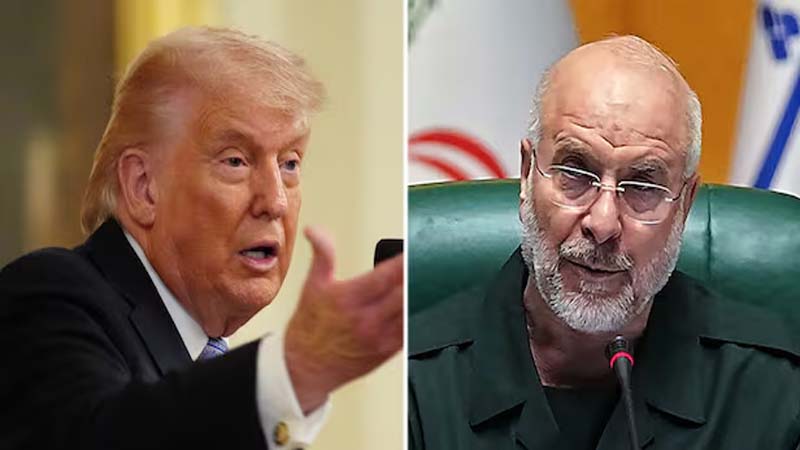
Davos/Tehran: Efforts to promote peace in the Middle East are continuing, but tensions between the United States and Iran appear to be rising once again. Ongoing talks between delegations from the two countries in Davos, Switzerland, have been overshadowed by a strong statement from US President Donald Trump, further intensifying the diplomatic atmosphere.
According to sources, representatives from Washington and Tehran are engaged in discussions on key issues including Iran’s nuclear program, regional security, and measures to reduce tensions across the Middle East. Pakistan and Qatar are reportedly serving as mediators in the negotiations. However, alongside the diplomatic engagement, a fresh exchange of sharp rhetoric has also emerged between the two sides.
President Donald Trump issued a stern warning to Iran through his social media platform, Truth Social, stating that the United States could take even tougher action if Tehran fails to curb the activities of Hezbollah in Lebanon. Trump said Iran must prevent its allied groups from destabilizing the region, warning that failure to do so could lead to serious consequences.
Iran Rejects US Threats
Iran responded strongly to Trump’s remarks. Senior Iranian leader and chief negotiator Mohammad Bagher Ghalibaf said Tehran would not be intimidated by American threats. He argued that if US pressure and warnings had been effective, Washington would not be facing its current challenges.
Ghalibaf stressed that Iran would not bow to any pressure concerning its national security and sovereignty. He further stated that the country’s armed forces were fully prepared to respond to any potential challenge. His remarks came as the two nations held their first delegation-level talks following a recently announced ceasefire.
Concerns Grow Over Strait of Hormuz
Another issue drawing attention during the talks is the Strait of Hormuz. Citing escalating tensions involving Israel and Lebanon, Iran has reportedly issued strong signals regarding the strategic waterway. However, US officials maintain that the vital maritime route remains open and that international shipping traffic is continuing under close monitoring.
Reports surrounding the Strait of Hormuz have also impacted global energy markets. International crude oil prices recorded gains amid concerns over potential disruptions to one of the world’s most important energy transit routes.
Diplomatic Distance on Display
The high-level meeting in Davos also began with visible signs of diplomatic friction. According to sources, members of the Iranian delegation declined to participate in a public handshake and joint photo opportunity with their American counterparts. The move has been widely interpreted as a signal of Tehran’s firm stance toward Washington.
The diplomatic distance was further evident when Iranian representatives reportedly stayed away from a media appearance featuring US Vice President J.D. Vance alongside leaders from Pakistan and Qatar. Analysts believe Iran was keen to avoid giving the United States an opportunity to shape the public narrative unilaterally before the global media.
Despite the tense atmosphere, some positive signals emerged. A warm interaction between Iranian Foreign Minister Abbas Araghchi and Pakistani Prime Minister Shehbaz Sharif highlighted Tehran’s willingness to maintain regional dialogue and diplomatic engagement.
Global Attention on Outcome of Talks
The ongoing talks come at a time when the Middle East continues to face instability on multiple fronts. While both the United States and Iran are attempting to reduce tensions through dialogue, the exchange of warnings and counter-warnings has raised concerns about the possibility of renewed confrontation in the region.
The international community is now closely watching whether the negotiations in Davos can produce a meaningful breakthrough or whether escalating rhetoric will once again push the Middle East toward a deeper crisis.