
Fuel Prices Rise for the First Time Since April 2022; Political Row Intensifies Over ₹3 Per Litre Hike
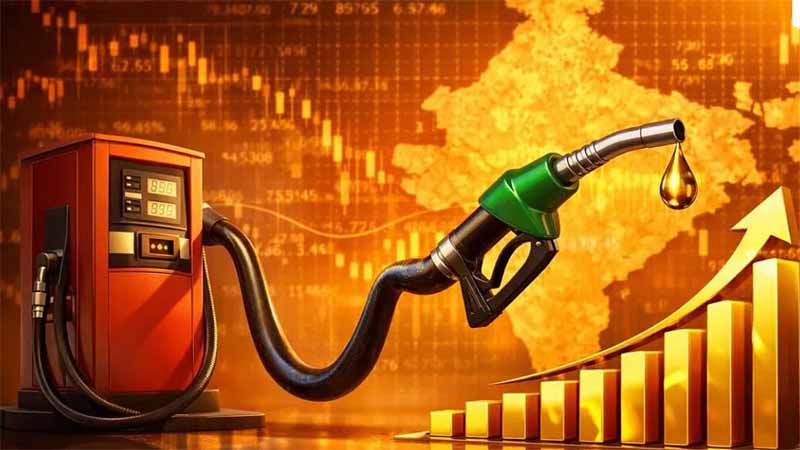
New Delhi: After remaining stable for nearly four years, petrol and diesel prices in the country have finally been increased. For the first time since April 2022, fuel prices have been raised in May 2026, with oil marketing companies announcing a ₹3 per litre hike in both petrol and diesel.
While the move is expected to increase the financial burden on the common man, opposition parties, particularly the Congress, have launched sharp attacks on the central government over the decision.
The government, however, has defended the hike, stating that the decision became unavoidable due to global circumstances and the continuous surge in crude oil prices in the international market.
Prices Had Remained Stable Since April 2022
India had been among the few countries where petrol and diesel prices had remained unchanged since April 2022.
However, in March 2024, just ahead of the Lok Sabha elections, the government had reduced prices of both fuels by ₹2 per litre, providing significant relief to consumers.
Since then, no changes were made despite severe fluctuations in global oil prices and the ongoing West Asia crisis. Several neighbouring countries revised fuel prices two to three times during the same period, but India delayed any increase until now.
Why Were Fuel Prices Increased?
According to experts, there are two major reasons behind the latest fuel price hike:
- A sharp increase in global crude oil prices
- A decline in India’s domestic strategic oil reserves
Sources indicate that since February 2026, India’s oil reserves have fallen by nearly 15 percent, dropping from 107 million barrels to around 91 million barrels.
This placed significant financial pressure on both the government and oil marketing companies.
Energy analysts say oil companies had been absorbing losses for months to keep prices stable, but the situation had become unsustainable.
PM Modi Appeals for Fuel Conservation
Considering the seriousness of the situation, Prime Minister Narendra Modi has appealed to citizens to conserve fuel.
He advised people to:
- Use public transport more frequently
- Adopt carpooling
- Promote work-from-home wherever possible
- Prefer online meetings
The Prime Minister also urged people to avoid unnecessary foreign travel and excessive gold purchases to reduce pressure on foreign exchange reserves.
Farmers have also been encouraged to reduce chemical fertiliser usage and adopt solar-powered irrigation systems.
Oil Companies Had Sought ₹16–17 Per Litre Increase
According to sources, state-run oil marketing companies had proposed a ₹16 to ₹17 per litre increase in fuel prices.
However, the government approved only a ₹3 per litre hike, avoiding a major one-time burden on consumers.
This has raised speculation over whether further fuel price hikes may follow in the coming months.
Experts believe that if global conditions do not improve, the government may approve phased price increases.
Petrol Now ₹97.77 Per Litre in Delhi
Following the latest revision, petrol in Delhi is now priced at ₹97.77 per litre, while diesel costs ₹90.67 per litre.
Prices of CNG and LNG have also increased across the country, adding to concerns among consumers and industries alike.
Impact of the West Asia Crisis
Experts say the primary reason behind the fuel price increase is rising geopolitical tension in West Asia.
The escalating conflict between the United States, Israel, and Iran since late February has severely affected global energy markets.
The crisis in the Strait of Hormuz, one of the world’s most critical crude oil transportation routes, has significantly disrupted oil supplies.
As a result, Brent crude prices crossed $100 per barrel multiple times, briefly touching $120 per barrel.
Why India Is Directly Affected
India imports over 80 percent of its crude oil requirements.
Any rise in international oil prices directly impacts domestic fuel pricing.
Disruptions in oil supplies from Gulf nations have further worsened challenges for import-dependent countries like India.
Heavy Financial Pressure on Oil Companies
Government-owned oil companies had been bearing the additional burden of rising global prices for months to shield consumers from sudden shocks.
However, industry estimates suggest that public sector oil firms were suffering losses of nearly ₹10 billion per day.
Union Petroleum Minister Hardeep Singh Puri recently acknowledged that pressure on state-run refineries had been mounting steadily.
He stated that oil companies could not continue absorbing losses indefinitely.
Inflation Concerns Mount
Fuel price hikes have a direct impact on inflation.
According to official data:
- Petrol inflation in April 2026 stood at 32.4%
- High-speed diesel inflation was 25.19%
Retail inflation rose to 3.48% in April 2026, compared to 3.40% in March.
Wholesale inflation has reached a 42-month high of 8.3%.
Experts warn that rising fuel costs will increase transportation expenses, impacting the prices of daily essentials, agricultural products, and industrial goods.
Congress Targets Centre
The Congress has strongly criticised the fuel price hike.
Congress General Secretary Jairam Ramesh said that when global crude prices were low, the government failed to pass on benefits to consumers and instead imposed heavy taxes.
He alleged that after state elections concluded, the government first increased commercial LPG prices and has now raised petrol and diesel prices as well.
Ramesh claimed that this would inevitably fuel inflation and adversely impact economic growth.
What Lies Ahead?
Energy experts believe that unless tensions in West Asia ease soon and crude oil prices stabilise, further increases in petrol and diesel prices cannot be ruled out.
For now, the ₹3 hike sends mixed signals—relief because it is far lower than what oil companies had sought, and concern because it may be only the beginning of a larger pricing adjustment in the months ahead.