
UN Security Council to Hold Crucial Meeting on Iran Conflict; Drone Attack Reported Near Haifa Port
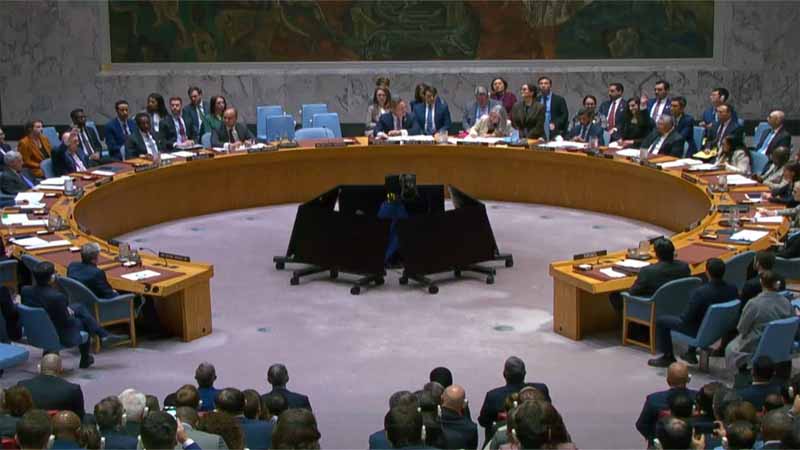
New Delhi : The ongoing conflict in the Middle East shows no signs of de-escalation, with fresh reports of attacks emerging from Iran, Israel, and Lebanon. Amid escalating tensions, the United Nations Security Council is set to hold a crucial meeting on March 28 to address the deteriorating situation.
Israel has reportedly carried out strikes on key infrastructure targets inside Iran, while Tehran has retaliated by launching missiles towards Israel and the United Arab Emirates. In a significant development, a drone attack was reported near Israel’s Haifa port, raising further concerns over maritime security in the region.
Meanwhile, U.S. President Donald Trump announced an extension of the deadline for Iran to reopen the Strait of Hormuz until April 6. He also stated that the United States would refrain, for now, from bombing Iran’s energy facilities. The announcement comes at a time when ceasefire talks appear to be stalled, with both sides hardening their positions.
In an interview with Fox News, Trump claimed that the United States had already “won the military war” against Iran, asserting that joint U.S.-Israeli operations had significantly weakened Tehran’s naval and missile capabilities.
Adding to concerns, Israel Defense Forces Chief of Staff Lt. Gen. Eyal Zamir warned that mounting operational pressure and worsening manpower shortages could risk the internal stability of the Israeli military. According to reports, he expressed serious concerns during a recent security cabinet meeting.
IAEA Raises Alarm Over Bushehr Nuclear Plant
The International Atomic Energy Agency (IAEA) has expressed deep concern following reported military strikes near Iran’s Bushehr nuclear power plant. IAEA Director General Rafael Grossi warned that any damage to the facility, which contains significant nuclear material, could trigger a major radiological disaster affecting Iran and the wider region. He called for maximum restraint and adherence to nuclear safety principles during the conflict.
Iran Launches 83rd Wave of Retaliatory Attacks
According to Iranian state media, the Islamic Revolutionary Guard Corps (IRGC) has launched the 83rd wave of its “Operation True Promise 4,” targeting key U.S. and Israeli military installations across the region using advanced missiles and drones. Reported targets include oil depots in Ashdod, a military facility in the Modiin settlement, and a U.S. military information exchange center.
Additional strikes were reported on U.S. bases in Al-Dhafra and Al-Udeid, as well as maintenance and storage hangars for transport aircraft and drones at Ali Al Salem Air Base.
UN Warns of Escalating Conflict in Eastern Congo
Separately, the United Nations has warned that conflict in mineral-rich eastern Congo is intensifying. Acting UN envoy Vivian van de Perre told the Security Council that the increased use of heavy weapons and attack drones poses a serious threat to civilians. Clashes between M23 rebels and Congolese forces continue to escalate in North and South Kivu provinces.
Fertilizer Shortage and Food Price Risks
The Iran conflict is also impacting global agriculture. Tehran’s near closure of the Strait of Hormuz in response to U.S. and Israeli strikes has caused gas prices to surge, disrupting fertilizer supplies. This shortage threatens farmers worldwide, particularly in developing countries already grappling with climate challenges.
World Food Programme Deputy Executive Director Carl Skau warned that many of the poorest farmers in the Northern Hemisphere depend heavily on fertilizer imports from Gulf countries, and the disruption comes at the critical start of the sowing season.
Netanyahu Claims Killing of IRGC Naval Commander
Israeli Prime Minister Benjamin Netanyahu claimed that Israeli forces had killed IRGC Navy commander Alireza Tangsiri, who was allegedly leading efforts to close the Strait of Hormuz. In a video statement, Netanyahu said Israel would continue its full-force strikes against Iranian targets.
Heavy missile, rocket, and drone attacks from Iran and Lebanon triggered sirens across Israel, forcing civilians into shelters multiple times throughout the day. Medical officials reported that at least ten people were injured in the attacks.
As tensions continue to rise, the upcoming UN Security Council meeting is expected to play a critical role in shaping the international response to the rapidly evolving crisis.