
Scrap Set to Power India’s Steel Future, Drive Green Growth and Self-Reliance: mjunction Steel Conference
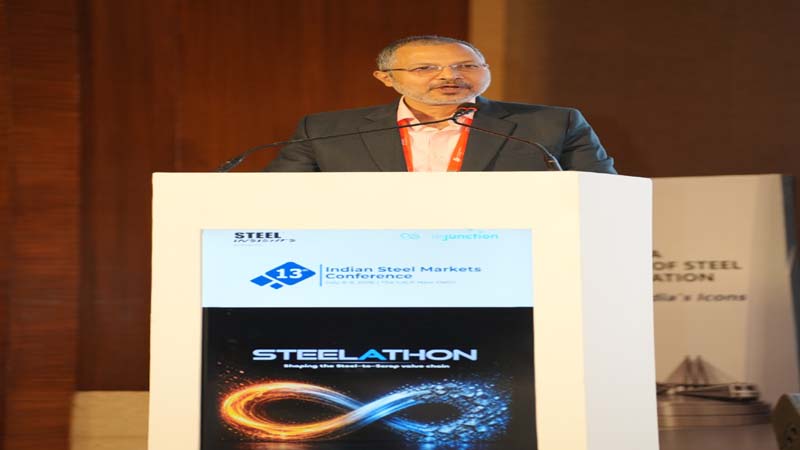
Experts at the 13th Indian Steel Market Conference Highlight Scrap as the Key to Low-Carbon, Sustainable Steel Production
New Delhi: Steel scrap is emerging as a critical resource in making India’s rapidly expanding steel industry more sustainable, environmentally friendly, and future-ready, industry leaders said at the inaugural session of the 13th Indian Steel Market Conference, organized by mjunction in New Delhi.
The two-day conference, themed “Steelathon: Building the Steel-to-Scrap Value Chain,” brought together industry experts to discuss green steel production, resource efficiency, supply chain resilience, and India’s long-term self-reliance in the steel sector.
Scrap is Now the Most Valuable Raw Material: SAIL Chairman
Addressing the conference, Dr. Ashok Kumar Panda, Chairman and Managing Director of Steel Authority of India Limited (SAIL), said reducing carbon emissions and minimizing environmental impact are among the steel industry’s top priorities.
He emphasized that these goals can be achieved through improved operational practices, advanced technologies, and greater use of cleaner raw materials. According to him, steel scrap—once considered waste—has now become one of the industry’s most valuable resources.
Scrap is the Foundation of Tomorrow’s Steel Industry
Welcoming delegates, Vinay Varma, Managing Director and CEO of mjunction, said scrap is no longer just discarded material but the foundation of the future steel ecosystem.
He noted that with India’s steel demand continuing to rise, scrap has evolved from being a by-product into a strategic raw material. Every tonne of steel produced from scrap helps conserve natural resources, reduce dependence on imported scrap, and strengthen India’s manufacturing sector.
No Single Solution for Green Steel Production
Ashish Anupam, Vice President – Marketing & Sales at Tata Steel, said there is no single technology capable of delivering low-carbon steel production.
He stressed that a balanced combination of green hydrogen, carbon capture technologies, increased scrap utilization, and electric arc furnace (EAF) technology will be essential. He also called for greater collaboration, innovation, and collective efforts to achieve self-reliance in the steel sector.
Building a Competitive and Resilient Steel Industry
Rajat Gupta, Senior Partner at McKinsey & Company, said India’s steel production capacity and consumption are expanding rapidly. However, he emphasized that the industry must also become more resilient to geopolitical risks, cost-competitive, and sustainable over the long term.
India Targets 300 Million Tonnes Steel Capacity by 2030
India is working towards increasing its steel production capacity to 300 million tonnes by 2030. Achieving this ambitious target will require a reliable supply of high-quality raw materials, making scrap management an increasingly important national priority.
mjunction Strengthens India’s Scrap Supply Chain
Leveraging its extensive operational network, mjunction supplied approximately 2.5 million tonnes of steel scrap to steel plants across the country during the last financial year.
The company has also played a significant role in transforming India’s fragmented scrap market into a more organized, transparent, and circular value chain.
Industry experts concluded that expanding scrap-based steel production will not only help India meet its environmental commitments but also strengthen the country’s global competitiveness while advancing the vision of a greener and more self-reliant steel industry.