
Why Are Jersey Numbers 9 and 10 So Special in the FIFA World Cup? A 96-Year Legacy of Greatness
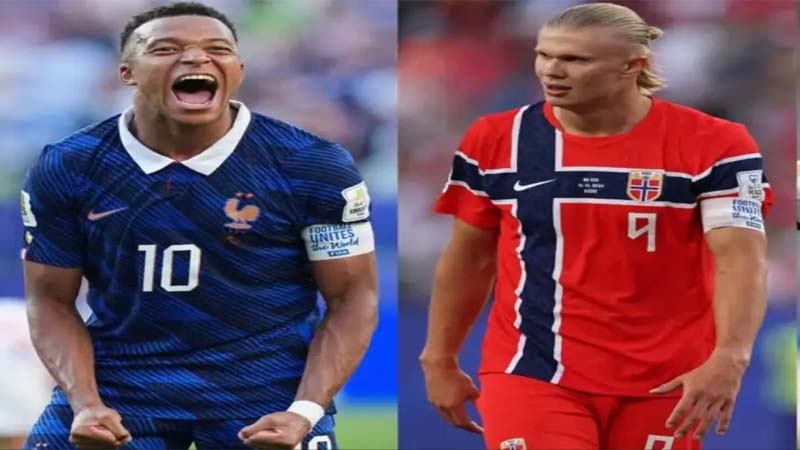
From legendary playmakers to prolific goal scorers, jersey numbers 9 and 10 have defined football’s biggest stars
For nearly a century, jersey numbers 9 and 10 have held a special place in football history. More than just squad numbers, they have become symbols of greatness, leadership, and match-winning performances. As the 2026 FIFA World Cup progresses, these iconic numbers continue to dominate headlines, with some of the tournament’s biggest stars leading their nations from the front.
Messi, Mbappé, Kane, and Haaland Carry the Legacy Forward
Argentina’s Lionel Messi and France’s Kylian Mbappé proudly wear the iconic No. 10 jersey, while England captain Harry Kane and Norway striker Erling Haaland lead the attack wearing the famous No. 9 shirt.
All four players have played pivotal roles in guiding their teams to the quarter-finals and remain among the leading contenders for the Golden Boot.
Pelé Made Number 10 Legendary
The prestige of the No. 10 jersey can largely be traced back to Brazilian legend Pelé, who made the number iconic during the 1958 FIFA World Cup. The legacy was further elevated by Diego Maradona, whose inspirational performances led Argentina to World Cup glory in 1986.
Since then, football greats including Zinedine Zidane, Rivaldo, Ronaldinho, Lionel Messi, and Kylian Mbappé have carried the tradition forward, making No. 10 synonymous with creativity, vision, and leadership.
Today, the No. 10 shirt is widely regarded as the jersey of a team’s most influential and imaginative player.
Number 9: The Shirt of Football’s Deadliest Finishers
If No. 10 represents creativity, No. 9 symbolizes goals.
Throughout World Cup history, the No. 9 jersey has been worn by some of football’s greatest strikers and Golden Boot winners. Italian legend Paolo Rossi claimed the Golden Boot with six goals in 1982, followed by Gary Lineker (1986), Davor Šuker (1998), Ronaldo Nazário (2002), and Harry Kane (2018), all wearing the iconic No. 9 shirt.
The number has become a global symbol of elite goal scorers and clinical finishers.
Dominating the 2026 Golden Boot Race
The influence of jersey numbers 9 and 10 is once again evident at the 2026 FIFA World Cup.
- Lionel Messi (No. 10) – 8 goals
- Kylian Mbappé (No. 10) – 7 goals
- Erling Haaland (No. 9) – 7 goals
- Harry Kane (No. 9) – 6 goals
- Ousmane Dembélé – 5 goals
Among the 89 goals scored by the eight quarter-finalists so far, 42 have come from players wearing jersey numbers 9 and 10, highlighting their continued impact on football’s biggest stage.
How Are Jersey Numbers Assigned?
At the FIFA World Cup, jersey numbers are allocated by each national team’s management in accordance with FIFA regulations. While players often request their preferred numbers, the final decision rests with the coaching staff and team management.
Squad members can be assigned numbers 1 to 26, with No. 1 traditionally reserved for the goalkeeper. Over time, many footballers become so closely associated with a particular number that it evolves into an integral part of their identity and legacy.
A Tradition That Continues
For generations, jersey numbers 9 and 10 have represented the very best of world football. Whether it’s the creative brilliance of a playmaker or the lethal finishing of a striker, these iconic shirts continue to produce unforgettable moments and shape World Cup history. As the 2026 tournament unfolds, the legacy of these legendary numbers remains as strong as ever.