
Dharmendra Pradhan’s Exit Raises Questions for the Government, Sparks Fresh Political Debate
Krishanmohan Jha
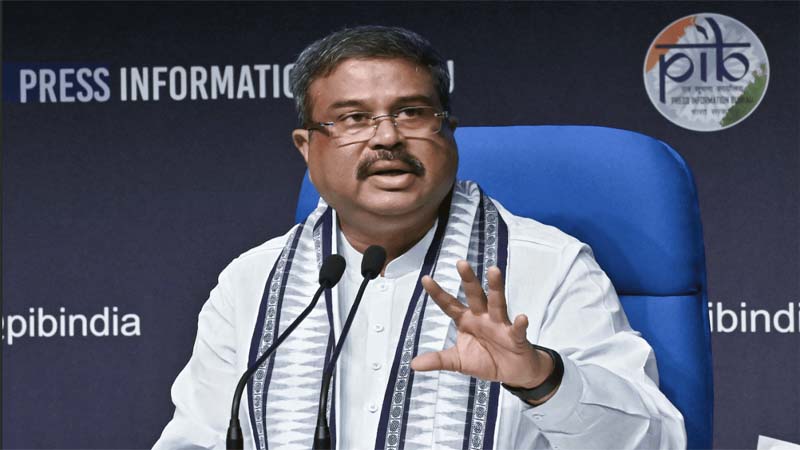
New Delhi: The resignation of Union Education Minister Dharmendra Pradhan has raised several political and administrative questions for the Central Government. After weeks of protests by opposition parties, student organizations, and various social groups demanding his resignation, Pradhan finally submitted his resignation to Prime Minister Narendra Modi. The development came just before the third round of talks between the government and the protesting groups.
According to sources, in his resignation letter, Dharmendra Pradhan expressed respect for the aspirations and sentiments of the country’s youth. Earlier, the protesting organizations had made it clear that there would be little purpose in continuing discussions with the government unless the Education Minister stepped down.
Demand for Resignation Had Been Building for Weeks
Following the NEET paper leak controversy, calls for the Education Minister’s resignation gathered momentum. Protesters argued that accountability must be fixed for the alleged irregularities in the examination system. Opposition parties also raised the issue both inside Parliament and on the streets.
During the Monsoon Session of Parliament, several opposition parties, including the Congress, repeatedly demanded Pradhan’s resignation, leading to disruptions in parliamentary proceedings. The Congress leadership maintained that discussions could not move forward without fixing responsibility for the controversy.
Government Announced Reforms, But Protests Continued
Amid the controversy, the Central Government announced several measures aimed at strengthening the examination system. Prime Minister Narendra Modi proposed stricter anti-paper leak legislation, the establishment of fast-track courts, and greater transparency in the examination process. He also appealed directly to the youth, but the protesting students remained firm in their demand for the Education Minister’s resignation.
One of the government’s biggest concerns was that accepting the resignation under protest pressure could set a precedent for future movements demanding the removal of ministers. This was widely seen as one of the reasons the government initially resisted the demand.
Remarks by RSS Chief and Senior BJP Leader Added to the Debate
During the ongoing controversy, RSS Sarsanghchalak Dr. Mohan Bhagwat emphasized the importance of engaging with the younger generation and understanding their concerns. Speaking at a public event, he said that society must devote time to young people and maintain meaningful dialogue with them.
Senior BJP leader and former Union Human Resource Development Minister Dr. Murli Manohar Joshi also acknowledged that students’ concerns regarding the examination system were genuine. He stressed the need for constructive dialogue and meaningful solutions to address their grievances.
Political Focus Shifts to Future Reforms
Following Dharmendra Pradhan’s resignation, political discussions have now shifted toward the government’s next steps to restore confidence in the country’s examination system. Observers believe the proposed Anti-Paper Leak Bill, fast-track judicial mechanisms, and broader examination reforms are likely to become the government’s immediate priorities.
Political analysts suggest that the episode is not merely about the resignation of a Cabinet minister. It is being viewed as a significant moment in the broader debate over accountability, governance, and rebuilding public confidence in India’s examination system, particularly among students and young aspirants.