Japanese Visitors Show Strong Interest in Rajasthan’s Traditional Textiles and Handicrafts
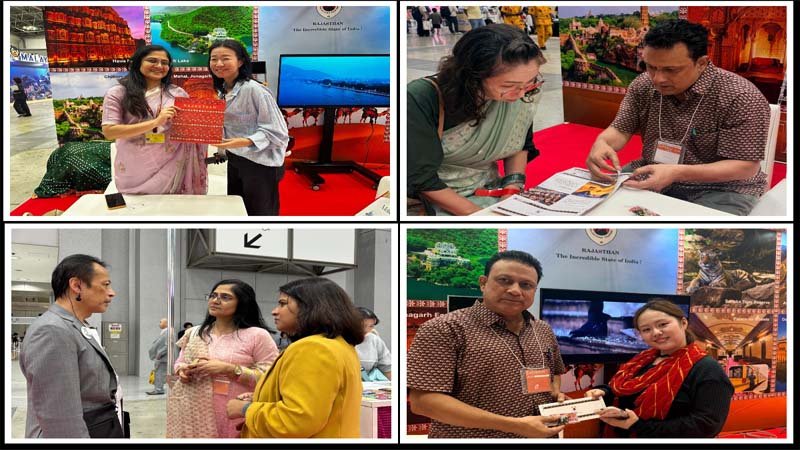
Jaipur/Tokyo : The vibrant colours, intricate craftsmanship and centuries-old artisanal traditions of Rajasthan drew considerable attention at the Rajasthan Tourism Pavilion (G-38) on the third day of Tourism Expo Japan 2026. Japanese visitors and travel trade representatives showed keen interest in Rajasthan’s traditional attire, textiles and handicrafts, with particular curiosity around Bandhej, Leheriya, Sanganeri and Bagru printing traditions, as well as Jaipur’s distinctive Blue Pottery.
Under the leadership of Tourism Secretary Shuchi Tyagi, Joint Director Ajay Sharma led the activities at the Rajasthan Pavilion and interacted with Japanese visitors and members of the travel trade, highlighting the state’s traditional textile and craft heritage.
Sharma said that Rajasthan’s traditional textiles and handicrafts were receiving considerable interest from visitors at the expo. He said the state’s traditional attire represents much more than clothing, reflecting the cultural identities, colours, designs and generations-old craftsmanship of different regions of Rajasthan.
He said Bandhej and Leheriya, along with the hand-block printing traditions of Bagru and Sanganer, were among the key attractions for Japanese visitors. Several visitors sought information about the techniques involved in creating these textiles and expressed curiosity about the traditional skills passed down through generations of artisans.
Sharma explained that Sanganeri hand-block printing and Bagru’s traditional wooden-block printing have their own distinctive characteristics, with Bagru particularly known for its traditional printing techniques and use of natural colours. Visitors also showed interest in understanding the various stages involved in the creation of these handcrafted textiles.
Jaipur Blue Pottery was another attraction at the pavilion. Its distinctive colours, intricate decorative patterns and traditional production techniques generated considerable curiosity among Japanese visitors.
According to Sharma, Rajasthan Tourism is presenting the state in the Japanese market as a destination where visitors can go beyond purchasing traditional products and experience the craftsmanship behind them. Opportunities to interact with artisans, observe traditional printing techniques and gain a closer understanding of local textile traditions are being positioned as part of the tourism experience.
The strong visitor engagement at the Rajasthan Pavilion on the third day of Tourism Expo Japan highlighted the growing interest among Japanese visitors in Rajasthan’s traditional textiles, attire and handicrafts, while offering the state an opportunity to showcase its living craft traditions to an international audience.