Krishna’s Birthplace and the Rs 2.50 Agreement: How Much Longer Must the Wait Continue?
Questions over the legality of the 1968 agreement, hearing of 18 connected cases and the faith of millions of devotees put the spotlight on the Mathura Shri Krishna Janmabhoomi dispute
New Delhi: Mathura, the birthplace of Lord Shri Krishna, is not merely a religious destination. It represents the faith, cultural consciousness and spiritual heritage of millions of followers of Sanatan Dharma. Yet, ironically, the dispute surrounding the land that millions of devotees revere as Lord Krishna’s birthplace continues to remain before the courts. The question is inevitable: How much longer will devotees have to wait for clarity on Kanha’s birthplace?
Following the judicial resolution of the Shri Ram Janmabhoomi dispute in Ayodhya, expectations within the Sanatan community regarding the Mathura and Kashi disputes have naturally grown. However, each case has its own historical and legal context. The prolonged nature of the Shri Krishna Janmabhoomi dispute has nevertheless raised several important questions.
How Did a Question of Faith Come to Be Decided on a Rs 2.50 Stamp Paper?
At the centre of the controversy is an agreement dated October 12, 1968, which continues to attract attention. According to accounts of the agreement, it was executed on a stamp paper worth just Rs 2.50.
The agreement concerned approximately three acres of land out of the total 13.37 acres associated with Shri Krishna Janmabhoomi, including the area claimed to house the original sanctum sanctorum. It was entered into between the Shri Krishna Janmasthan Seva Sangh and the Shahi Masjid Eidgah Trust.
Under the arrangement, provisions concerning the coexistence of the two religious structures and the use of the land were accepted. Subsequent judicial proceedings also resulted in decrees connected with the agreement.
The fundamental question, however, remains: Did a managing institution or trust have the legal authority to enter into an agreement concerning property that, under Hindu religious law, is regarded as belonging to the deity itself?
Was adequate consideration given to the wider religious and public interests before an arrangement concerning a matter of faith for millions of devotees was finalised?
Agreement During President’s Rule Raises Political Questions
When the agreement was executed on October 12, 1968, Uttar Pradesh was under President’s Rule. The state remained under President’s Rule from February 25, 1968, to February 26, 1969. At the Centre, the Congress government was in power under the leadership of Prime Minister Indira Gandhi.
The political and administrative circumstances surrounding the agreement naturally invite scrutiny. In the absence of an elected state government, why was such a sensitive arrangement concerning religious faith and property finalised? Were the rights of all concerned parties and the religious sentiments involved adequately represented at the time?
However, the fact that an agreement was executed during President’s Rule does not, by itself, make it legally invalid. Its circumstances, the authority of the parties involved and its legal validity require examination under the applicable law.
If the Deity Is a Legal Person, What Were the Rights of the Managers?
One of the most significant legal dimensions of the dispute concerns the status of a deity as a juristic person under Hindu law.
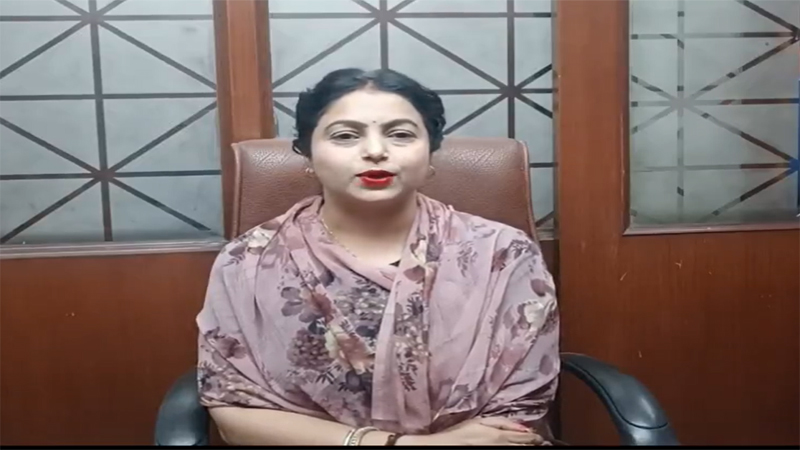
In a representation submitted by advocate Reena N. Singh to Uttar Pradesh Chief Minister Yogi Adityanath, serious objections have been raised regarding the validity of the 1968 agreement. The representation invokes Order XXIII Rule 3 of the Code of Civil Procedure, 1908, and argues that the agreement was not consistent with the relevant legal provisions.
According to the representation, both the temple’s managing trust and the Shahi Masjid Eidgah Trust were private entities. This raises questions about their respective authority and ownership rights over the disputed property.
Under Hindu law, a deity is recognised as a juristic person, and temple property is generally regarded as vested in the deity. The Supreme Court also recognised the legal personality of the deity in its judgment in the Ayodhya case.
In this context, the role of a temple’s manager or trust is primarily associated with the management and protection of temple property. Could such a managing body enter into an agreement affecting the property and religious rights associated with the deity?
This is a crucial legal question that could have a significant bearing on the future course of the dispute.
The representation further argues that an agreement under Order XXIII Rule 3 should not be accepted if it adversely affects public interest or the broader interests of the community. It calls for an examination of this aspect, given the religious significance of the matter for millions of devotees.
Demand for the Chief Minister’s Intervention: What Is the Legal Way Forward?
Advocate Reena N. Singh has urged Chief Minister Yogi Adityanath to take appropriate action within the constitutional framework and seek the cancellation of the 1968 agreement.
However, an important constitutional and legal question arises here. If the agreement subsequently became the basis of a judicial decree, can the state government invalidate it merely through an administrative order? Or would appropriate relief have to be obtained through judicial proceedings?
Political will may have a role in addressing matters connected with religious faith, but adherence to the established legal process is equally essential.
The government’s responsibility need not end with the statement that the matter is sub judice. It can play a role in clarifying the legal position, facilitating appropriate proceedings within its jurisdiction and ensuring transparency in matters falling within its authority.
Hearing of 18 Connected Cases and the November 21 Developments
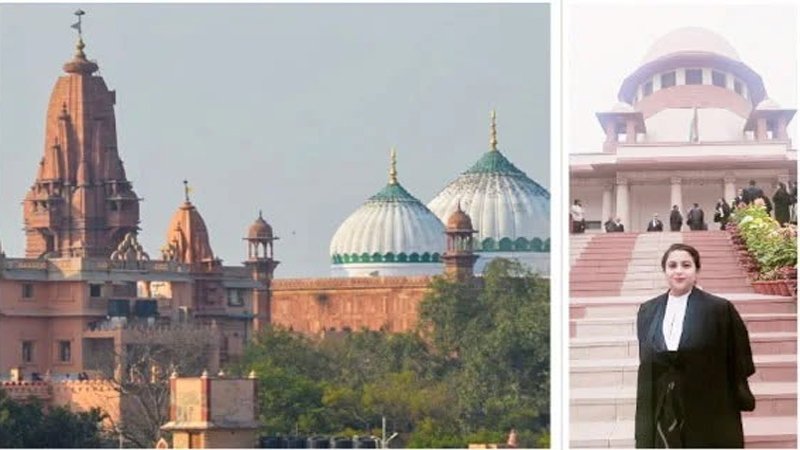
The Shri Krishna Janmabhoomi-Shahi Masjid Eidgah dispute is currently before the Allahabad High Court, where 18 connected suits are being heard together.
In August 2024, the High Court held that the concerned suits were maintainable. This, however, did not amount to a final determination of ownership of the disputed property.
According to reports published about the developments of November 21, 2026, the court dismissed an application seeking the cancellation of the 1968 agreement and the decrees of 1973-74, observing that such relief could not be granted without a proper trial.
It is important to understand that the dismissal of this application does not amount to a final judicial declaration that the agreement is valid. The relevant questions remain subject to examination through the judicial process.
The mosque side has also raised the issue of limitation, arguing that the agreement and subsequent decrees date back several decades. On the other hand, the Hindu side has questioned the agreement’s legality, the authority of the parties who executed it and alleged irregularities.
Thus, the dispute extends beyond competing religious claims. It involves important legal questions concerning ownership, the legal rights of the deity, the validity of the agreement and the law of limitation.
Respect for Faith and the Judicial Process Must Go Hand in Hand
The Shri Ram Janmabhoomi dispute continued for decades before the Supreme Court delivered its historic verdict, paving the way for the construction of the grand Ram Temple in Ayodhya. That development reshaped expectations within the Sanatan community.
However, the Mathura dispute must also be resolved on the basis of its own historical evidence, legal merits and judicial proceedings. The final determination of the rights of the parties rests with the court.
Since the Shri Krishna Janmabhoomi issue is connected with the faith of millions of devotees, there is a legitimate expectation that the matter should receive timely judicial attention, clear legal examination and a resolution based on evidence rather than prolonged uncertainty or political rhetoric.
The Time Has Come for Clarity on Kanha’s Birthplace
Mathura, associated with the birth of Lord Shri Krishna, holds an invaluable place in India’s civilisational and Sanatan heritage. Questions surrounding this sacred site must be addressed not through emotional confrontation but through historical evidence, legal scrutiny and constitutional processes.
The debate that centres on an agreement reportedly executed on a Rs 2.50 stamp paper has now become an important question before the country’s judicial system, with the faith of millions of devotees at its heart.
What is the legal validity of the agreement? Did the institutions concerned possess the authority to enter into such an arrangement? Will the judicial process adequately examine the rights and claims of all parties?
These questions deserve clear answers.
The Shri Krishna Janmabhoomi dispute should not become a matter of political credit or the prestige of any government. It is fundamentally an issue involving faith, law and justice. The Sanatan community seeks judicial clarity, not confrontation. What matters now is that justice is delivered through due process without unnecessary delay. The question remains: How much longer must devotees wait for clarity on Kanha’s birthplace?