
Memorial Lecture Honours Dr. Satya Narayan Singh, Emphasises Good Governance Through Transparency, Accountability and Public Trust
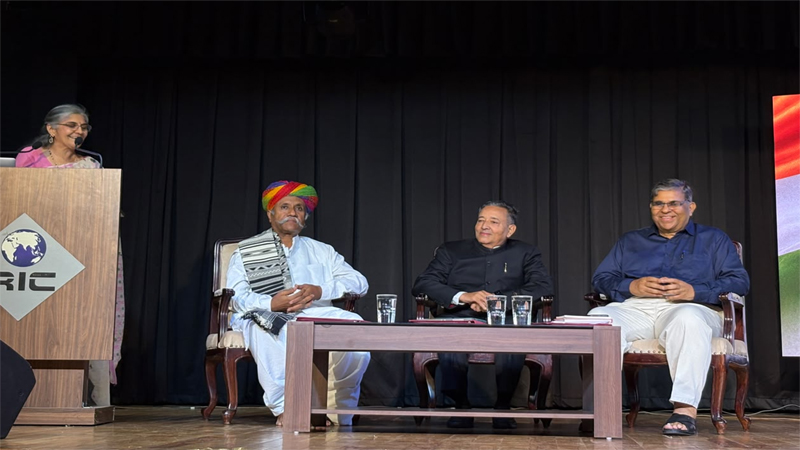
Jaipur: The third memorial lecture in honour of renowned administrator, social worker and thinker Dr. Satya Narayan Singh, IAS (Retd.), was held at the Rajasthan International Centre on Saturday. The event, themed “Administration for Good Governance,” brought together eminent administrators, academicians, legal experts, public representatives and civil society members to deliberate on the principles of ethical and citizen-centric governance.
Delivering the keynote address, Dr. Mahendra Kumawat, former Director General of Police (IPS), said that good governance is not merely an administrative concept but the foundation of a civilized society. He observed that the constitutional ideals of justice, liberty, equality and fraternity can only be realized through an administration that is honest, efficient, transparent and compassionate.
He described the administrative system as a vital bridge between the promises of the Constitution and the everyday lives of citizens. Highlighting corruption, lack of accountability, delays in justice and poor inter-departmental coordination as major challenges to good governance, Dr. Kumawat stressed the need for greater citizen participation, responsible use of technology, innovation, transparency and accountable governance. He also paid tribute to Dr. Satya Narayan Singh, describing his life as a shining example of integrity, humility, compassion and public service.
The special guest speaker, Rajendra Bhanawat, former IAS officer, underlined that rebuilding trust between the government and citizens is the foremost requirement for achieving good governance. He advocated replacing the mindset of “eligibility” with that of “rights” in welfare schemes and stressed the importance of equal application of the law. He called for greater sensitivity in administration, transparency, accountability, ethical recruitment and training of civil servants, and enhanced accessibility of senior officials. According to him, digitisation alone cannot ensure good governance; it must be complemented by ethical leadership, a humane approach and firm intent. “Intent is more important than policy,” he remarked.
The programme was chaired by Padma Shri Anwar Khan Manganiyar, Vice Chairman of the Sangeet Natak Akademi, New Delhi. Recalling his close association with Dr. Singh, he highlighted the latter’s significant contribution as District Collector of Jaisalmer in preserving and promoting the Manganiyar folk music tradition. He credited Dr. Singh’s visionary efforts with helping the Manganiyar community gain national and international recognition. As a tribute, Anwar Khan presented a devotional folk performance based on the theme of Radha-Krishna.
During the event, dignitaries released Dr. Satya Narayan Singh’s autobiography along with a compilation of his selected writings on society, public administration and good governance. Two new websites were also launched. One, developed by the Swachh Nagar Sansthan, Jaipur, is dedicated to promoting good governance and citizen participation, while the other serves as a digital archive documenting Dr. Singh’s multifaceted contributions as a student leader, administrator, social reformer and public intellectual.
The memorial lecture concluded with a collective pledge to uphold Dr. Singh’s ideals by promoting transparent, accountable, humane and citizen-centric governance, ensuring that the benefits of good governance reach the last person in society.
The programme witnessed participation from senior serving and retired civil servants, former All India Services officers, academicians, vice-chancellors, professors, legal experts, social workers, writers, representatives of various institutions, public representatives and a large number of distinguished citizens. Participants paid heartfelt tributes to Dr. Satya Narayan Singh and reaffirmed their commitment to advancing the values of ethical governance, public service and administrative excellence that he embodied.