
Karwa Chauth: A Changing Picture of Faith and Tradition in Modern Relationships
Srishti Jha
New Delhi : Karwa Chauth, a festival of special significance in North India, is celebrated with great enthusiasm by married women. In the days leading up to the festival, markets witness increased demand for traditional attire, bangles, jewellery, mehndi, cosmetics and puja essentials. Preparations also begin at home, with families arranging sargi, puja thalis and other items associated with the occasion.
On Karwa Chauth, women traditionally observe a fast and pray for their husbands’ long life, good health and a happy married life. The festival is celebrated with traditional fervour across several parts of North India, including Delhi, Uttar Pradesh, Rajasthan, Punjab, Haryana, Himachal Pradesh and Madhya Pradesh. Rituals and customs vary from region to region, reflecting the diversity of local traditions.
From Sargi to Moonrise: Keeping Traditions Alive
According to traditional customs, women consume sargi before sunrise on Karwa Chauth. In many families, mothers-in-law offer their daughters-in-law fruits, sweets and other food items as a gesture of blessings and affection. Women then observe a fast, traditionally without food or water, until moonrise.
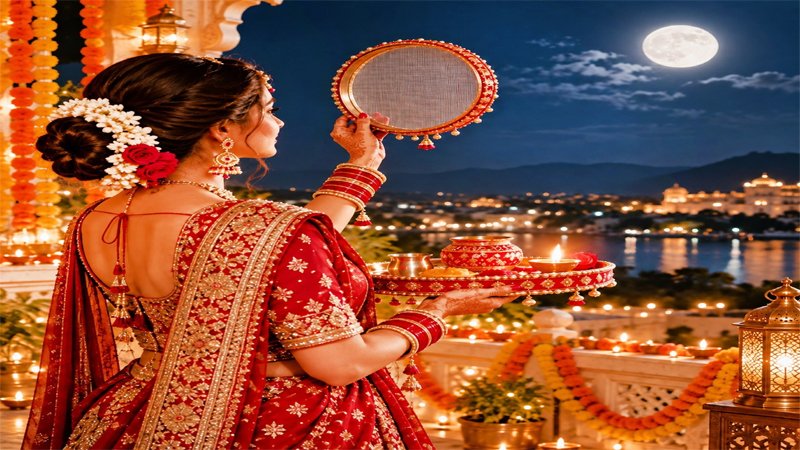
In the evening, prayers are offered to Lord Shiva, Goddess Parvati, Lord Ganesha and Karwa Mata, and the traditional Karwa Chauth story is narrated. After sighting the moon, women offer arghya and, according to a widely followed custom, look at the moon and their husbands through a sieve before breaking their fast. In many households, husbands offer water to their wives to help them conclude the fast.
These rituals are associated with love, trust, commitment and prayers for the well-being of married couples.
The Story of Veeravati Holds Special Significance
Several mythological and folk stories are associated with Karwa Chauth, with the story of Veeravati being among the most widely known. According to the traditional tale, Veeravati observed a strict fast on her first Karwa Chauth. Seeing their sister distressed by hunger and thirst, her brothers created the appearance of the moon using a lamp and a sieve. Believing it to be the real moon, Veeravati broke her fast.
The story goes on to describe a crisis in her husband’s life. According to the legend, Veeravati’s devotion and observance of the fast according to the prescribed rituals ultimately helped restore his well-being.
Another folk narrative associated with Karwa Mata tells the story of a devoted woman named Karwa, highlighting her courage, determination and commitment to her husband. These stories form part of India’s religious folklore and cultural traditions.
A Significant Occasion for Shopping and Business
Karwa Chauth also provides an important seasonal opportunity for local businesses. Shopping for clothing, jewellery, bangles, mehndi and cosmetics brings customers to local markets. Mehndi artists, beauty salons, sweet shops and gift retailers also cater to the festival’s demand.
However, assessing the actual increase in sales and business activity would require market-specific data.
The ways in which the festival is celebrated have also evolved over time. Many hotels and restaurants offer special meals and festive decorations. Some couples choose to dine out after breaking the fast, while others prefer to celebrate at home with traditional dishes and family gatherings.
Tradition Amid Changing Social Attitudes
Modern social attitudes towards Karwa Chauth have gradually broadened. Traditionally observed by women praying for their husbands’ long lives, the fast is now also observed by some husbands alongside their wives. Many couples view the occasion as an opportunity to express mutual love, commitment and respect.
Observing a fast is a matter of personal faith and choice. A strict fast without water may not be suitable for everyone’s health. People with medical conditions or those taking regular medication should seek medical advice based on their individual circumstances. Respecting religious traditions while considering personal health and well-being is equally important.
Karwa Chauth represents not only religious faith but also family bonds and cultural heritage. While the ways of celebrating the festival continue to evolve, its central message of love, trust and mutual respect remains relevant in changing times.

