
Delhi High Court Declines Immediate Relief on Sonam Wangchuk’s Plea for Transfer to Private Hospital, Allows 24/7 Family Access
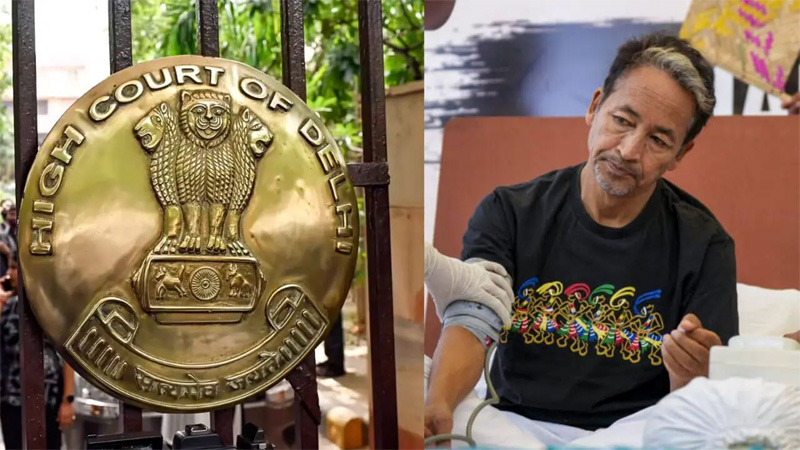
New Delhi: The Delhi High Court has declined to grant immediate relief on a plea seeking the transfer of social activist Sonam Wangchuk from Safdarjung Hospital to a private medical facility. However, the court directed that his family members be allowed to meet him round the clock.
On Sunday, a single-judge bench of Justice Mini Pushkarna heard a petition filed by Wangchuk’s wife, Geetanjali J. Angmo, seeking his transfer to a private hospital such as Medanta. The court accepted the Centre’s submissions, observing that Wangchuk’s bodily autonomy had not been violated. It noted that the government’s decision to hospitalise him was necessitated by his deteriorating health and was neither arbitrary nor unreasonable.
The court observed that Wangchuk, who had been on a hunger strike at Jantar Mantar over the NEET-UG paper leak case, had not admitted himself to a hospital despite his worsening health. Under such circumstances, the government was justified in intervening.
At the same time, the High Court issued notices to the Central Government, Delhi Police, and Safdarjung Hospital on the plea seeking his transfer to a private hospital and sought their responses. The matter has been listed for hearing on July 24.
During the proceedings, the court also clarified that Wangchuk’s wife, brother, and other close family members would be permitted to meet him 24 hours a day.
Notably, on the 21st day of his hunger strike, Delhi Police shifted Wangchuk from Jantar Mantar to Safdarjung Hospital on Saturday. He has been on an indefinite fast since June 28, protesting the alleged irregularities in the NEET examination and the reported suicides of several students following the controversy.
Additional Solicitor General Chetan Sharma informed the court that doctors at Safdarjung Hospital were providing proper medical care to Wangchuk and continuously monitoring his health. He added that the patient’s cooperation was also essential for effective treatment.
Appearing for the petitioner, Senior Advocate Kapil Sibal argued that Wangchuk was not under any form of custody and therefore had the right to choose the hospital where he wished to receive treatment. Responding to the submission, the court observed that if medical intervention became necessary and Wangchuk consented, he would be expected to cooperate with the treating doctors.