
I Am the Rajasthani Turban: Every Fold Carries the Pride, Honour and Glory of Rajasthan
Sonal Jain
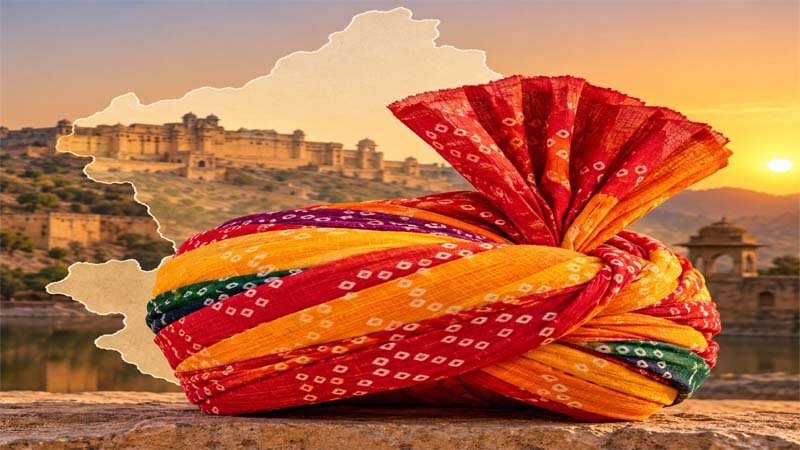
I am the Rajasthani turban. My colours reflect the culture of the desert land, my folds embody the depth of its traditions, and every layer carries centuries of history. I am not merely a piece of cloth wrapped around the head; I am a symbol of honour, self-respect, dignity and social prestige. I have witnessed Rajasthan transform with changing times, yet I continue to preserve its distinctive cultural identity.
Across Rajasthan, I am known by different names and take on different forms. In some regions, I am called Pag, elsewhere Safa, Pecha or Potiyo. From Marwar and Mewar to Jaipur, Jaisalmer, Jalore and Sirohi, my colours, fabrics and styles of tying change with the region. It is often said that the dialect changes every twelve kos in Rajasthan. Much like the state’s linguistic diversity, my style of tying also transforms from one region to another. This diversity makes me a living expression of Rajasthan’s vibrant cultural heritage.
A Colour for Every Season and Celebration
I dress according to the season, occasion and emotion. In spring, I adorn myself in shades of pink; during the monsoon, I take on the flowing patterns of Leheriya; in the festive spirit of Phalgun, I wear colours associated with Phaguniya. On auspicious occasions, saffron often becomes my defining hue. At weddings, my Mothda style holds a special place, while white and other traditional colours are associated with mourning and solemn occasions.
My colours are much more than a matter of beauty. They form a symbolic language that reflects Rajasthan’s folk life, changing seasons, festivals, social customs and emotions. Through me, one can discover a unique way of understanding the region’s cultural traditions.
My usefulness is as significant as my beauty. Under Rajasthan’s scorching sun, I protect the head from intense heat. When needed, my long fabric has also served practical purposes, including being used as a rope or for other household needs. I am, therefore, a natural blend of tradition, craftsmanship and everyday life.
A Symbol of Honour, Trust and Relationships
In Rajasthan, my dignity has long been associated with the honour of the person who wears me. Disrespect towards me has traditionally been regarded as an affront to personal prestige. History has witnessed struggles to defend the honour I represent, while, at other times, I have helped transform disputes into reconciliation.
When two people exchange turbans, they symbolically accept each other as brothers and pledge to uphold a relationship built on trust. Welcoming a guest by adorning them with a turban is also an age-old expression of respect and hospitality. Similarly, in certain Rajasthani communities, the ritual of tying a turban on the eldest son following his father’s death signifies the transfer of family responsibilities and succession.
My presence extends deep into the language and everyday expressions of Rajasthan. Phrases such as “Pagdi ki laaj rakhna” (to uphold one’s honour), “Pagdi uchhalna” (to insult someone’s dignity) and “Pagdi badal bhai” (a brother bonded through the exchange of turbans) reflect my enduring place in the region’s social consciousness.
I have grown beyond being a garment. I represent relationships, dignity, mutual trust and the values that bind communities together.
A Heritage Rooted in History and Craftsmanship
My history stretches back centuries. Ancient literature uses terms such as Ushnisha, Shiraveshtan and Shirastrana for head coverings. Historical records also document the variety of turbans, their colours, fabrics and prices, revealing the many forms I have assumed over time.
From cotton and muslin to silk and zari, I have been fashioned from a wide range of textiles. Names such as Jaswantshahi, Chudawatshahi, Bhimshahi, Udayshahi, Manshahi and Rajshahi reflect the historical diversity of my styles and traditions.
Regional influences have given me distinct identities, while generations of artisans have enriched each form through their skill and creativity. Every variation tells a story of local customs, craftsmanship and the artistic sensibilities of its time.
Tying me is an art in itself. It requires practice, patience and precision to manage the length of the fabric, its folds, the tension and the arrangement of each turn. A skilled turban-tier can transform even a simple piece of cloth into an emblem of cultural pride.
Preserving my tradition, therefore, means more than protecting a traditional garment. It also means keeping alive the indigenous skills, techniques and craftsmanship passed down through generations.
From Desert Traditions to Global Cultural Experiences
Today, I serve as an ambassador of Rajasthan’s cultural identity, introducing the state’s heritage to visitors from across India and around the world. Tourists are drawn to my vibrant colours and distinctive styles. Many enjoy wearing me, having their photographs taken in a traditional turban, learning how to tie one and discovering the stories woven into my folds.
At cultural gatherings such as the Pushkar Fair, turban-tying competitions offer visitors an engaging opportunity to experience local traditions firsthand. Cultural destinations such as the Turban Museum in Jaipur and Bagore Ki Haveli in Udaipur also provide opportunities to explore the variety and significance of traditional turbans.
My presence adds a distinctive dimension to Rajasthan’s cultural tourism. The traditional colours, regional styles and art of turban-tying are important elements of the state’s intangible cultural heritage and local craftsmanship. By bringing artisans, visitors and cultural traditions together, I help create a meaningful connection between heritage, tourism and livelihoods.
My Identity Is Rajasthan’s Identity
Times have changed, and clothing styles have evolved. Yet I continue to adorn heads at weddings, festivals, fairs and cultural celebrations. I connect younger generations with their roots and introduce the world to the cultural richness of Rajasthan.
I am the Rajasthani turban. My identity is not limited to my colours, fabric or folds. I am a bearer of the land’s self-respect, warmth, traditions and collective memory. Every fold carries a story, and every colour expresses an emotion deeply rooted in Rajasthan’s soul.
Whenever someone places me on their head, they wear more than a traditional garment. They embrace a legacy and pay tribute to the Aan, Baan and Shaan of Rajasthan—its honour, pride and glory.
(The author is an independent commentator)