
India Scripts History in Railway Electrification, 99.6% of Broad Gauge Network Now Electrified
India Ranks Second Globally After Switzerland; 18.5 Billion Litres of Diesel Saved, Delivering Major Foreign Exchange and Environmental Gains
New Delhi: Indian Railways has achieved a historic milestone by electrifying 99.6% of the country’s Broad Gauge (BG) railway network, making India the second most electrified railway system in the world, behind only Switzerland (100%). According to the Ministry of Railways, work on the remaining network is progressing rapidly.
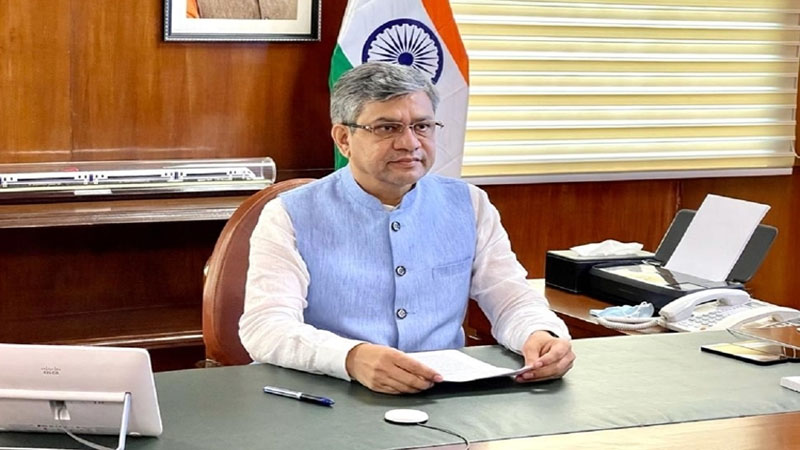
Replying to a question in the Lok Sabha, Union Minister for Railways, Information & Broadcasting, and Electronics & Information Technology Ashwini Vaishnaw said that Indian Railways has successfully completed one of the world’s fastest railway electrification programmes.
Over 48,000 Route Kilometres Electrified in Just 12 Years
According to the Ministry of Railways, before 2014, only 21,801 route kilometres of railway lines had been electrified over nearly 60 years. Between 2014 and 2026, Indian Railways electrified an additional 48,072 route kilometres, reflecting an unprecedented pace of infrastructure development. All new railway lines and multi-tracking projects are now being approved and constructed with electrification from the outset.
India Surpasses Several Major Railway Nations
According to the International Union of Railways (UIC) June 2025 report, India has overtaken several advanced railway systems in terms of network electrification.
- Switzerland – 100%
- India – 99.6%
- China – 82%
- Spain – 67%
- Japan – 64%
- France – 60%
- United Kingdom – 39%
With this achievement, Indian Railways has emerged as one of the world’s most extensively electrified large railway networks.
Massive Reduction in Diesel Consumption
One of the biggest benefits of railway electrification has been the sharp decline in diesel consumption. Diesel usage for train operations has fallen from 2.93 billion litres in 2015-16 to 1.08 billion litres in 2024-25, resulting in a saving of nearly 1.85 billion litres of diesel.
This has significantly reduced India’s fuel import bill, leading to substantial savings in valuable foreign exchange while also lowering carbon emissions.
A Major Boost to Green Transportation
Indian Railways said electric traction is not only environmentally friendly but also highly energy efficient. According to a NITI Aayog report, transporting one tonne of freight over one kilometre by road emits 101 grams of CO₂, whereas the same movement by rail emits only 11.5 grams of CO₂—approximately 89% lower emissions than road transport.
Strong Push for Renewable Energy
To further reduce its carbon footprint, Indian Railways is rapidly expanding its renewable energy portfolio. As of June 2026, it has commissioned:
- 1,161 MW of solar power capacity
- 103 MW of wind power capacity
Together, these account for more than 1,260 MW of renewable energy capacity. The Railways aims to progressively meet its traction power requirements through solar, wind and hybrid energy systems.
Nearly All Railway Zones Fully Electrified
Most railway zones across the country have now achieved 100% electrification, including Central Railway, Northern Railway, Eastern Railway, South Central Railway, Western Railway, North Central Railway, South Eastern Railway, East Central Railway, Konkan Railway and Kolkata Metro.
Most States Achieve Complete Electrification
Several states, including Uttar Pradesh, Bihar, Madhya Pradesh, Andhra Pradesh, Gujarat, Maharashtra, Delhi, Punjab, Jharkhand, Uttarakhand, Telangana, Odisha and West Bengal, have achieved 100% electrification of their Broad Gauge railway networks.
Mission Mode Implementation Continues
The Ministry of Railways said that to accelerate the 100% electrification mission, it has introduced several measures, including the Project Monitoring Group (PMG) Portal, strengthened project monitoring mechanisms, assured funding and enhanced financial powers for field units. Work on the remaining sections is progressing at a rapid pace.
Indian Railways believes that near-complete electrification will not only make train services faster, safer and more efficient but will also play a crucial role in achieving India’s Net Zero carbon emissions target while promoting sustainable and green transportation.