
Amarnath Yatra 2026: Amit Shah Reviews Security Arrangements, Multi-Layered Security Shield Put in Place; High Alert from Valley to Mountain Routes
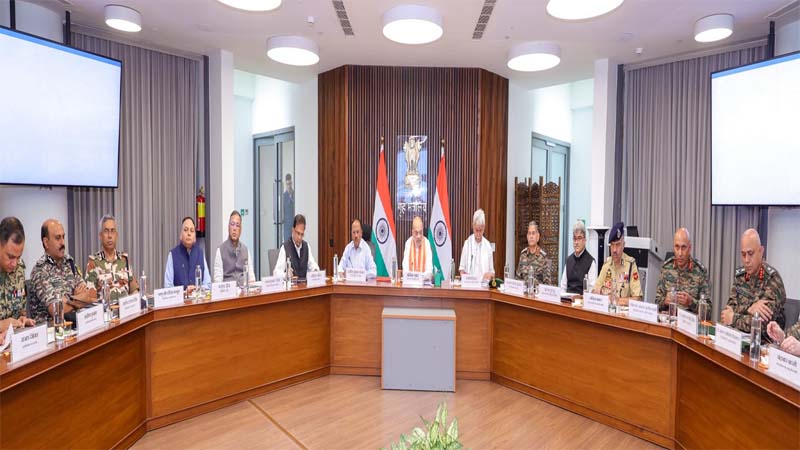
New Delhi: The Central Government is leaving no stone unturned to ensure the safe and smooth conduct of the Amarnath Yatra 2026. In a high-level review meeting chaired by Union Home and Cooperation Minister Amit Shah, senior officials from the Jammu & Kashmir administration, central security forces, intelligence agencies, and various ministries reviewed security preparedness, surveillance mechanisms, disaster management plans, and pilgrim facilities.
The meeting sent a clear message that there would be zero tolerance for any security lapses during the annual pilgrimage, with all agencies directed to work in close coordination.
Shah emphasized that under the leadership of Prime Minister Narendra Modi, the Government of India considers the safety and convenience of millions of pilgrims a top priority. He instructed all security and civil agencies to maintain seamless coordination and ensure comprehensive preparedness throughout the yatra.
Multi-Layered Security Cover
This year’s security strategy will go beyond conventional arrangements and incorporate advanced technology, real-time intelligence sharing, and extensive ground surveillance.
The Jammu & Kashmir Police, central armed police forces, the Army, and specialized counter-terror units will operate under an integrated security framework. Additional personnel will be deployed along pilgrimage routes, base camps, and other sensitive locations.
Round-the-clock patrolling, intensive vehicle checks, and a dedicated monitoring system are being established to detect and neutralize any threat before it materializes.
Technology at the Core of Security Planning
Technology is expected to play a crucial role in the 2026 security architecture. A large network of surveillance cameras will be installed across pilgrimage routes and camps.
Drones will continuously monitor difficult mountain terrains, narrow pathways, and vulnerable locations. Live video feeds will be transmitted to control rooms, enabling swift responses to suspicious movements or emergencies.
Authorities are also setting up specialized communication systems to facilitate real-time information sharing among security agencies.
Senior Officials to Oversee Ground Operations
To ensure accountability and rapid decision-making, senior officials will be stationed directly at key camps and pilgrimage routes. They will supervise security arrangements, disaster management drills, and pilgrim assistance centers.
Officials believe that the direct presence of senior leadership will help accelerate responses and improve coordination during any emergency situation.
Enhanced Facilities for Pilgrims
The government’s focus is not limited to security alone. The review meeting also discussed measures to improve pilgrim welfare and healthcare services.
Authorities have been directed to simplify the registration process and ensure uninterrupted availability of clean drinking water, temporary accommodation, electricity, and sanitation facilities.
Special medical camps equipped with oxygen support, emergency care units, specialist doctors, and ambulances will be established along high-altitude routes to provide round-the-clock healthcare assistance.
Disaster Management on High Alert
Given the unpredictable weather and challenging terrain of the Himalayan region, disaster management systems are being strengthened significantly.
The National and State Disaster Response Forces will remain on high alert throughout the pilgrimage period. Rescue equipment, heavy machinery, communication systems, and relief supplies will be pre-positioned at vulnerable locations to respond swiftly to incidents such as flash floods, landslides, or cloudbursts.
Mandatory Registration for Service Providers
Authorities have also decided to closely monitor local service providers involved in the yatra. Pony operators, porters, and other workers will undergo mandatory registration and receive QR code-based identity cards.
This will allow security agencies to verify identities instantly at checkpoints. Veterinary centers will also be established to monitor the health of horses and mules used during the pilgrimage, ensuring both animal welfare and efficient traffic management.
Weather-Based Movement Control
Weather forecasting will play a critical role in pilgrimage management this year. Pilgrim groups will be allowed to proceed only after clearance based on the latest meteorological assessments.
If adverse weather conditions are predicted, movement toward higher-altitude areas will be temporarily restricted, reducing the risk of weather-related accidents and crowd-management challenges.
Security Extended Beyond the Pilgrimage Route
The government has expanded the security perimeter beyond the traditional Amarnath pilgrimage routes. Additional security arrangements will be deployed at major tourist destinations, transportation hubs, hotel zones, and crowded public areas across the Kashmir Valley.
Since many pilgrims also visit other tourist attractions in Kashmir during their journey, authorities are keen to ensure a secure environment throughout the region.
Integrated Approach for a Safe Pilgrimage
The preparations for Amarnath Yatra 2026 reflect a comprehensive strategy that combines security, technology, disaster preparedness, and pilgrim welfare. The government’s objective is not only to ensure the successful conduct of the pilgrimage but also to provide every devotee with a sense of safety, confidence, and seamless service throughout the sacred journey.