
Lok Sabha Passes Anti-Paper Leak Bill Amid Uproar; Up to 10 Years in Jail and ₹10 Crore Fine
Stricter penalties, fast-track courts, and tighter timelines introduced to curb exam paper leaks; Bill passed by voice vote despite protests
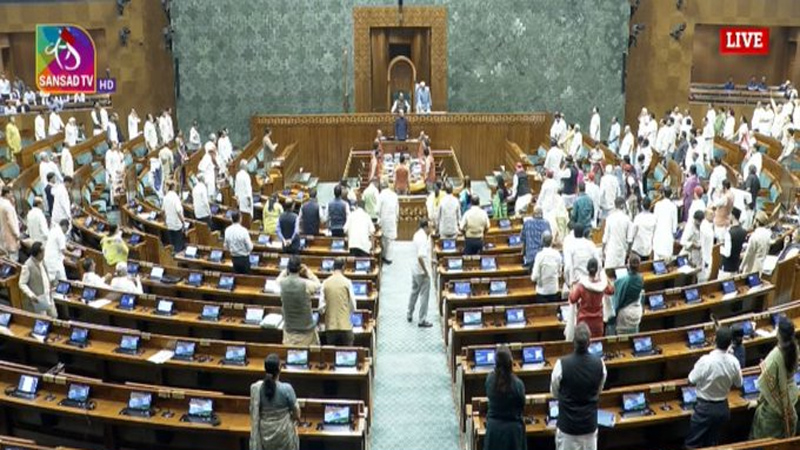
New Delhi: The Lok Sabha on Wednesday passed the Public Examinations (Prevention of Unfair Means) Amendment Bill, 2026 amid heated exchanges between the Treasury and Opposition benches. The debate witnessed sharp protests over remarks made by Leader of the Opposition Rahul Gandhi, but the House approved the Bill by voice vote after Union Minister of State in the Prime Minister’s Office Dr. Jitendra Singh replied to the discussion. Following the passage of the Bill, Speaker Om Birla adjourned the House for the day amid sloganeering by Opposition members.
Government acted swiftly in NEET paper leak case: Jitendra Singh
Replying to the debate, Dr. Jitendra Singh said the government took immediate action in the NEET paper leak case, transferring the investigation to the CBI on July 12. He informed the House that a chargesheet was filed on July 28, and trial proceedings had already begun.
He added that once the amended law comes into force, such cases will be heard in fast-track courts, enabling judgments within five months. Singh said the 2024 law had introduced stringent provisions against paper leaks, but recent developments highlighted the need for even tougher penalties.
Minister criticises Opposition over paper leak claims
During his speech, Dr. Jitendra Singh criticised Congress leaders Gaurav Gogoi and Priyanka Gandhi over their remarks on examination-related issues.
Referring to Gogoi’s statement about alleged action against students in Delhi, Singh said the government had exercised maximum restraint. He also recalled incidents during the Assam students’ movement between 1979 and 1984, alleging that police action under the then Congress government resulted in hundreds of deaths.
Responding to Priyanka Gandhi’s claim that paper leaks had occurred 152 times in recent years affecting millions of students, Singh questioned the source of the figures. He also said that since the 2024 law came into force, 52 FIRs had already been registered in such cases.
Key changes in the 2026 Amendment Bill
The government said the amendment aims to strengthen the integrity and credibility of public examinations by significantly increasing punishments for offenders.
For individual offenders:
- Jail term increased from 3–5 years to 5–10 years
- Fine increased from ₹10 lakh to ₹50 lakh
For service providers/agencies:
- Maximum fine increased from ₹1 crore to ₹5 crore
- Blacklisting period extended from 4 years to 8 years
For organised paper leak syndicates:
- Jail term enhanced from 5–10 years to 7–10 years
- Maximum fine increased from ₹1 crore to ₹10 crore
Fast-track courts and fixed investigation timeline
The amendment also provides for the establishment of special fast-track courts for speedy disposal of paper leak cases. Investigations by central agencies or designated Special Task Forces must be completed within two months, ensuring quicker prosecution and judgments.
Government accuses Opposition of diverting debate
During the discussion, Union Parliamentary Affairs Minister Kiren Rijiju accused Opposition parties of diverting attention from the Bill by raising unrelated issues. He said the government was committed to protecting the interests of students and ensuring fairness in competitive examinations through stricter legal measures.
The government maintained that the amended legislation represents a major step towards safeguarding the credibility of public examinations and deterring organised examination fraud across the country.