
Rajasthan Broadens Its Tourism Story in Japan, Bringing Wildlife, Villages and Folk Life into Focus
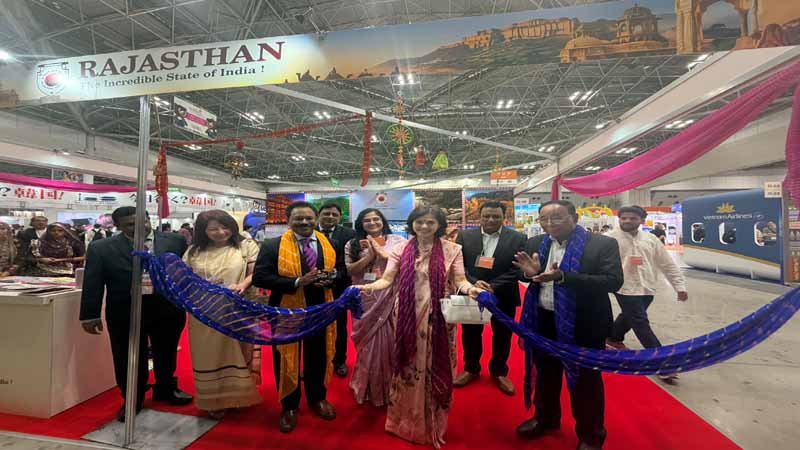
Tokyo : Rajasthan is expanding its tourism narrative in Japan, moving beyond its traditional image of forts, palaces and desert landscapes to showcase the state’s wildlife, handicrafts, rural life, folk culture, cuisine and immersive travel experiences.
The expanded tourism showcase is being presented at Tourism EXPO Japan 2026, one of Japan’s major tourism events, which opened on Thursday at Tokyo Big Sight. The Rajasthan Tourism pavilion was inaugurated by Nagma Mohammad Malik, Ambassador of India to Japan.
Rajasthan Tourism Secretary Shuchi Tyagi welcomed the Ambassador on the occasion. Suman Billa, Additional Secretary, Ministry of Tourism, Government of India, officials from the Central and Rajasthan governments, representatives of the Embassy of India, and members of Japan’s travel trade and tour-operating industry were also present.
The four-day Tourism EXPO Japan 2026 is being held from September 24 to 27. It is organised by the Japan Travel and Tourism Association, Japan Association of Travel Agents (JATA), and Japan National Tourism Organization (JNTO). This year’s theme is “The Changing Nature of Travel.”
From Jaipur to Shekhawati, Rajasthan showcases a wider range of experiences
Ajay Kumar Sharma, Joint Director (Marketing), Rajasthan Tourism, said the state’s presentation has been significantly broadened for the Japanese market, with greater emphasis on experiences beyond its iconic heritage attractions.
He said that alongside Rajasthan’s historic heritage, the state is showcasing wildlife, folk arts, handicrafts, rural life, cuisine and locally rooted experiences as important tourism offerings.
“Along with Jaipur, we are particularly focusing on destinations such as Udaipur, Jodhpur, Jaisalmer, Bikaner, Ranthambore, Bharatpur and Shekhawati, with the aim of connecting them more closely with the Japanese tourism market,” Sharma said.
The objective, he added, is to encourage travellers to experience different facets of Rajasthan within a single journey—from its architectural heritage and wildlife to rural communities, traditional crafts, cuisine and living culture.
The presentation has also been designed to allow Japanese travellers to create itineraries around their individual interests, combining heritage with wildlife, culture, crafts and rural tourism rather than limiting their Rajasthan experience to a few well-known monuments.
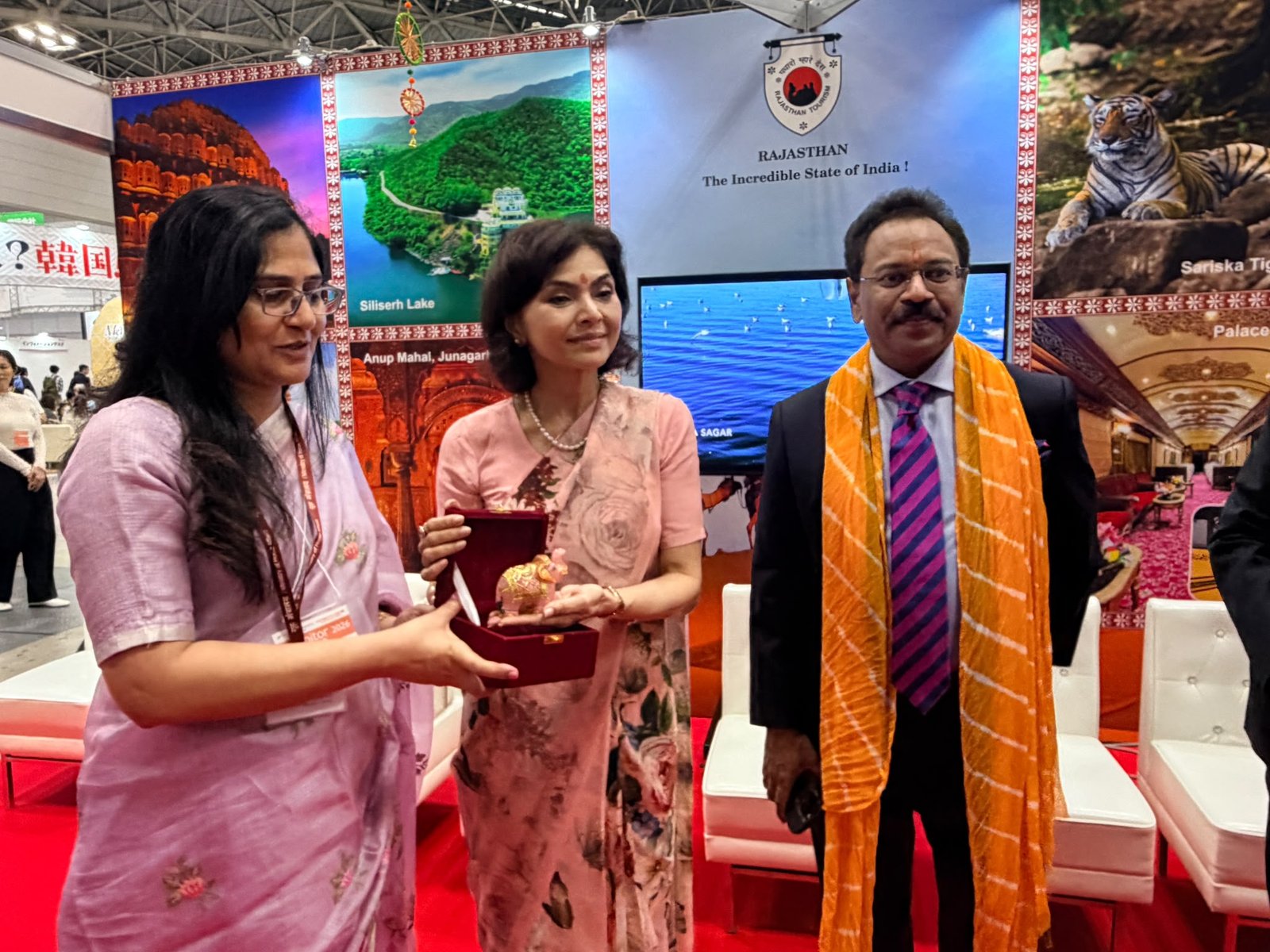
Folk music and dance add a cultural dimension
The Rajasthan Tourism pavilion has also emerged as a vibrant showcase of the state’s living cultural traditions. Folk music and dance performances are introducing Japanese visitors to Rajasthan’s distinctive cultural landscape.
Japanese artists performed traditional Rajasthani folk forms, including Kalbelia and Chirmi, drawing considerable attention from visitors at the pavilion. The performances offered an opportunity to present Rajasthan’s cultural heritage directly to Japanese audiences in an engaging and interactive manner.
Focus on stronger engagement with Japanese travel trade
Business networking and industry engagement form an important part of Tourism EXPO Japan. September 24 and 25 are dedicated to industry and media, while September 26 and 27 are open to the general public.
Ajay Kumar Sharma said strengthening direct engagement with Japanese tour operators and travel-trade professionals is a key objective of Rajasthan’s participation. The state is using the platform to explore opportunities to take a wider range of destinations and tourism products to the Japanese market.
He said Rajasthan’s presentation in Japan reflects the broadening of the state’s tourism identity.
“Rajasthan is being presented not only through its forts and palaces, but also through its forests, villages, folk traditions, handicrafts, cuisine and everyday cultural experiences,” Sharma said.
The Rajasthan pavilion in Tokyo is consequently presenting Japanese visitors with a broader picture of the state—one where royal heritage exists alongside wildlife, nature, craftsmanship and local life, offering a more diverse and immersive Rajasthan travel experience.