
Used Sanitary Pads Can Be Repurposed for Organic Compost, Special Workshop Highlights Menstrual Hygiene and Sustainable Waste Management
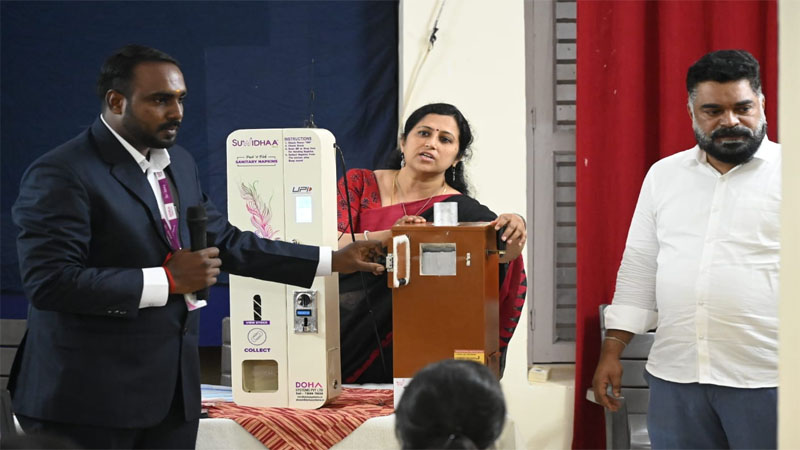
New Delhi: A special awareness workshop on Menstrual Hygiene Management (MHM) was organised at the Indian Women’s Press Corps (IWPC) in New Delhi to promote awareness about menstrual health, women’s well-being, and the environmentally safe disposal of used sanitary pads. The workshop was jointly organised by Doha Systems Private Limited and Mind-Map Enterprises Private Limited.
Experts at the workshop stressed that menstrual hygiene extends beyond the use of sanitary pads and also includes their safe, scientific, and eco-friendly disposal. They explained that when used sanitary pads are processed using appropriate technology, the resulting residue can be utilised in environmentally sustainable applications, including the preparation of biological compost. Such practices not only ensure safe sanitary waste management but also contribute to environmental conservation.
Although awareness about menstrual hygiene has improved significantly across India over the past decade, challenges related to sanitation infrastructure, safe disposal of sanitary waste, and social stigma continue to persist. The workshop aimed to address these concerns by encouraging healthy menstrual practices and introducing sustainable waste management solutions.
The interactive session witnessed enthusiastic participation from women journalists and members of the IWPC, who raised questions on menstrual health, personal hygiene, infection prevention, and scientific methods of sanitary waste disposal.
Speaking at the event, Ms. Mrinalini Rao, Head of Doha Systems Private Limited, highlighted that effective menstrual hygiene management is incomplete without a proper disposal mechanism. She noted that while the use of sanitary pads has increased considerably, their improper disposal poses serious risks to both public health and the environment.
She also outlined Doha Systems’ contribution towards implementing sanitary napkin vending machines and high-temperature incinerators in line with the Government of India’s Menstrual Health Management Policy (2023). These incinerators safely destroy used sanitary napkins by converting them into sterile ash under controlled temperatures. Depending on the model, the machines can process anywhere from a few sanitary pads to 1,200–2,500 napkins in a single cycle. The resulting ash is collected in a dedicated tray, ensuring a clean, safe, and environmentally responsible disposal process. The technology is also NABL-certified, reaffirming its safety and reliability.
Representing Mind-Map Enterprises Private Limited, M. Mayavarman said that under the ‘Her Health Hygiene (HHH)’ initiative, the organisation has been conducting awareness programmes across schools, colleges, industries, institutions, and communities throughout India. More than 1,000 awareness workshops have been organised so far, directly benefiting over 100,000 women and girls by educating them on menstrual health, infection prevention, personal hygiene, and the safe disposal of sanitary napkins.
The organisers further informed that under the Her Health Hygiene (HHH) initiative, Doha Systems and Mind-Map Enterprises are promoting menstrual hygiene across Tamil Nadu, Maharashtra, Odisha, Himachal Pradesh, and Assam. The organisations have successfully installed sanitary napkin vending machines and incinerators in government and educational institutions, as well as in more than 340 industries and private organisations, significantly contributing to improved menstrual hygiene management and women’s health across the country.
The workshop concluded with a live demonstration of a sanitary napkin vending machine and an incinerator. Experts reaffirmed that greater awareness, scientific waste management, and the adoption of modern technologies can help make menstrual hygiene practices safer, healthier, and more environmentally sustainable across India.