Government of India Constitutes ‘High-Level Committee on Demographic Change’
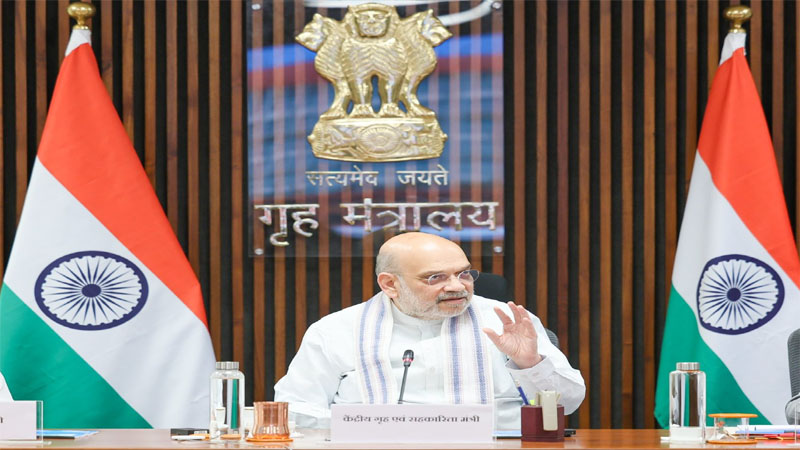
New Delhi: The Government of India has constituted a High-Level Committee on Demographic Change to study demographic shifts arising from illegal immigration and other abnormal factors, and to recommend measures to address the challenges posed by such changes across the country.
Prime Minister Narendra Modi had announced the “High-powered Demography Mission” on August 15, 2025, and the proposal was approved by the Union Cabinet on September 11, 2025.
The committee will be chaired by Justice Prakash Prabhakar Naolekar (Retd.). Along with the Census Commissioner, the panel will include noted experts such as Durga Shankar Mishra, Balaji Srivastava Retd IPS, and Shamika Ravi as members. The Joint Secretary (Foreigners-I), Ministry of Home Affairs, will serve as the Member Secretary.
The committee has been tasked with submitting its report within one year, with the possibility of a six-month extension if required.
Union Home and Cooperation Minister Amit Shah stated that “unnatural demographic change caused by infiltration and other factors poses a serious challenge to the present and future of any nation.”
He emphasized that demographic change is not merely a statistical concern but a critical issue linked to India’s sovereignty, national security, law and order, social stability, and the protection of tribal communities.
According to the government, the committee will undertake a comprehensive scientific assessment of demographic changes taking place in various parts of India due to illegal immigration and other unusual factors. It will analyze patterns of population shifts across religious and social communities and propose structured, time-bound solutions.
Key Terms of Reference of the Committee:
- Examine challenges arising from demographic changes, including illegal immigration
- Study causes such as cross-border activities, economic opportunities, and social-environmental factors
- Identify abnormal settlement patterns and planned migration trends
- Analyze structural population changes across religious and social communities
- Recommend a fair and time-bound system for identification, detention, and deportation of illegal immigrants
- Suggest mechanisms for stronger border management and population stabilization
- Propose a policy framework for improved coordination between the Centre and States
- Recommend any additional measures deemed necessary to address demographic imbalance
The government believes the committee’s findings will help formulate a comprehensive national strategy to address demographic challenges while safeguarding India’s social harmony and national interests.