
UNDP- HUL partner to scale up circular economy for plastics To strengthen end-to-end waste management by supporting 50,000 Safai Mitras & 50 cities by 2028
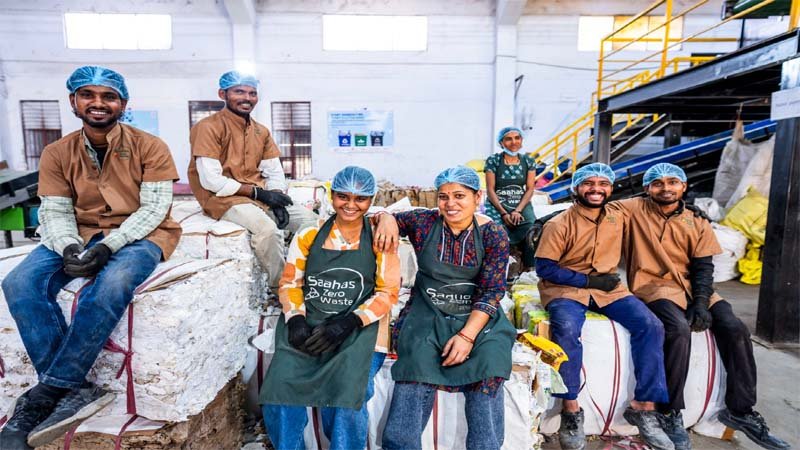
New Delhi: The United Nations Development Programme (UNDP) in India and Hindustan Unilever Limited (HUL) today announced a new phase in their partnership to further strengthen an inclusive circular economy across India. The objective is to support 50,000 Safai Mitras (waste workers) while strengthening waste management systems across 50 cities by 2028.
Building on seven years of collaboration, the next phase will help create stronger connections across the waste value chain, from segregation and collection to recovery, recycling and reintegration of materials into the economy. By combining stronger urban waste systems with the formalization and improved livelihoods of waste workers, the partnership aims to demonstrate scalable models for an inclusive circular economy that can be adopted by cities and Urban Local Bodies (ULBs) across India.
This next phase of the partnership will focus on four key and interconnected priorities:
· Social Inclusion: Advancing social equity by formalising and improving the livelihoods of 50,000 Safai Mitras, with a specific focus on women.
· Urban Systems: Strengthening the circular economy infrastructure across 50 cities and Urban Local Bodies (ULBs) to enable efficient, decentralised and resilient end to end waste management systems at scale.
· Improving recycling efficiency: strengthening waste recovery by improving waste segregation at source and building circular practices across entire value chains.
· Knowledge Transfer: Developing open-source and practical toolkits for adoption by government bodies, partners and research institutions.
The partnership is a part of Project Circular Bharat (PCB), one of HUL’s key initiatives focused on advancing plastic circularity through end-to-end, financially viable recycling models. UNDP is the institutional partner supporting policy alignment, systems strengthening and implementation at scale. Central to the collaboration is Project Utthaan, a social inclusion initiative focused on the dignity, occupational safety and social security of Safai Mitras.
This initiative is aligned with the Ministry of Social Justice and Empowerment (MoSJE) and implemented in coordination with the Ministry of Housing and Urban Affairs (MoHUA).
“This partnership reflects the power of collective action in scaling the circular economy in India. Our continued collaboration with UNDP is focused on advancing inclusive circularity, supporting the social inclusion, dignity, and safety of Safai Mitras, and building models that can be scaled across cities to create lasting systemic impact,” said B.P. Biddappa, Executive Director and Chief People, Transformation and Sustainability Officer, Hindustan Unilever.
Angela Lusigi, Resident Representative, UNDP India said, “Our partnership with HUL shows how inclusive circular economy approaches can strengthen both environmental sustainability and social equity. At the centre of this effort are Safai Mitras, who play a critical role in keeping urban waste systems running every day. Through support to cities, urban local bodies, institutions and communities, this partnership is helping build more inclusive and resilient urban systems, while ensuring that frontline waste workers are not left behind in the transition.”
Over seven years, the UNDP – HUL partnership has supported 24,000 Safai Mitras and enabled waste segregation across 120,000 households through more than 20 partners across five states. The initiative contributes to the Government of India’s Swachh Bharat Mission-Urban 2.0 and aligns with SDG 11 (Sustainable Cities and Communities) and SDG 12 (Responsible Consumption and Production).